|
'One more hit of crack cocaine'
Former CEO of Enron's broadband unit testifies company hid quarterly numbers at the expense of long-term business.
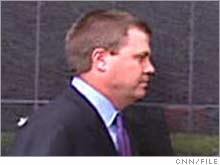
HOUSTON (CNNMoney.com) - Kenneth Rice, former CEO of Enron's broadband business, testified Tuesday that he knowingly misled investors about the unit, which was a key part of Enron's growth story before the company collapsed in 2001. Enron Task Force Director Sean Berkowitz questioned Rice in the trial of his former bosses, ex-Enron executives Ken Lay and Jeff Skilling, about how he made Enron Broadband Services (EBS) appear to be a valuable enterprise even as it was hemorrhaging tens of millions of dollars each quarter.
Asked if the broadband business ever actually made a profit, Rice responded "no." According to Rice, by the end of 2000 the broadband unit was struggling, with few customers and costs starting to balloon. Rice told the jury that Skilling encouraged EBS executives to show a significantly lower loss than the division could realistically achieve. "Mr. Skilling told me that ... we were getting a lot of pressure from analysts and he didn't need any more bad news," Rice said. Skilling's goal, Rice explained, was to make the broadband division appear to be a strong growth division. Rice testified that he and others at Enron presented information to analysts that led them to believe everything was fine. "Did you intend to mislead the analysts?" Berkowitz asked. "Yes," Rice replied. Rice read the transcript of a March 2001 analyst call that Skilling held to respond to rumors of layoffs and other problems in EBS. "Did Skilling fairly and accurately portray the true financial condition of EBS?" Berkowitz asked. "No," Rice responded. Skilling presented the layoffs in the broadband unit as good news, Rice explained. "The reality was, we were cutting people across the board because our cost structure was too high," Rice told the jury. Despite the restructuring, things got worse in the second quarter, Rice said in testimony. "We were selling the future revenues of our content services business," he said, "so we could take profits on it today." Rice referred to the uncertain accounting practice as "one more hit of crack cocaine." "I felt so much pressure to make our quarterly earnings," Rice said. "Did you hit your numbers (for the quarter)?" Berkowitz asked. "Yes we did," Rice responded. Rice will return to the stand Wednesday. Koenig finally off the stand
Earlier Tuesday, Skilling's attorney, Dan Petrocelli wrapped up his cross examination of Mark Koenig by suggesting that some of the "mistakes" Koenig made in his testimony could undermine his 2004 guilty plea agreement with the government. "On behalf of Jeff Skilling, we wish you all the best," Petrocelli said. Both Koenig and Rice pleaded guilty and agreed to cooperate with prosecutors in hope of securing a lighter prison sentence. Koenig faces up to 10 years in prison and $1 million in fines for his role in the collapse of Enron. Rice has pleaded guilty to a single count of securities fraud, agreeing to pay nearly $15 million, and faces up to 10 years in prison. Enron's 2001 bankruptcy was the largest in history at the time and was the first of a wave of business scandals that shook corporate America and led to the passage of tough new disclosure laws. Enron was once the nation's seventh-largest company. __________________________ Enron's defense could be brilliant... or crazy For a comprehensive look at the Enron saga, click here.
For all the day's latest business headlines, click here. |
|