|
Stop ID theft before it happens
Don't be a sitting duck; you can protect your credit from thieves before it is too late.
NEW YORK (CNNMoney.com) - Everybody fears identity theft but not many people do anything to prevent it from happening. A new Web site designed to help people protect their credit before it gets stolen went online Monday.
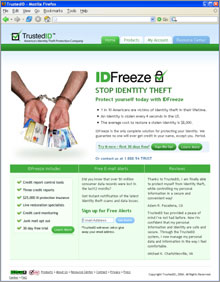
TrustedID, created by Scott Mitic, the former vice president of business development at Fair-Isaac and Omar Ahmad, the former chief information officer of Napster and Webmaster at Netscape, lets you freeze your credit report and force companies to double-check with you before opening a line of credit in your name. "This thing started when my brother-in-law got hit with repeated identity theft," Ahmad said. Once customers register and establish an account, they can try the IDFreeze service for free for 30 days and but then must pay $7.95 a month for the protection services. And, if anything were to happen, TrustedID promises to cover up to $25,000 of your expenses. Usually, consumers activate a fraud alert -- which means that you will be contacted if someone applies for credit in your name -- only after they have become aware that someone has been using private information to open up credit cards or other accounts. "I don't think that you should have to wait until after your identity has been compromised to do something," said Robert Siciliano, CEO of IDTheftSecurity.com, a firm that advises corporations on privacy issues. The founders acknowledge that consumers "could do this today, if they had the energy and volition to do it," but IDFreeze saves them the time and hassle. You can also follow these tips from the Federal Trade Commission to minimize your risk of identity theft. Put passwords on your credit card, bank and phone accounts. Avoid using easily available information like your mother's maiden name, your birth date, the last four digits of your Social Security number or your phone number, or a series of consecutive numbers. Ask about information security procedures in your workplace or at businesses, doctor's offices or other institutions that collect your personally identifying information. Find out if your information will be shared with anyone else. If so, ask how your information can be kept confidential. Don't give out personal information on the phone, through the mail, or on the Internet unless you've initiated the contact or are sure you know who you're dealing with. Treat your trash carefully. Tear or shred your charge receipts, copies of credit applications, insurance forms, physician statements, checks and bank statements, expired charge cards that you're discarding, and credit offers you get in the mail. Look at what's in your wallet. Don't carry your Social Security number card; leave it in a secure place. Carry only the identification information and the credit and debit cards that you'll actually need when you go out. Monitor the mailbox. When ordering new checks, pick them up from the bank instead of having them mailed to your home mailbox. Promptly remove mail from your mailbox and deposit your outgoing mail in post office collection boxes or at your local post office, rather than in an unsecured mailbox. If someone has already been using your information, it will show up on your credit report. Under the Fair and Accurate Credit Transactions Act, you can obtain one annual free copy of your report. For more information visit www.annualcreditreport.com or call 877-322-8228. If you discover that someone has obtained credit with your personal information, you must contact the three major credit bureaus: Experian, Equifax and TransUnion. Each year, an estimated nine million U.S. consumers are victims of identity theft, costing individuals and businesses approximately $50 billion. Identity theft has topped the Federal Trade Commission's annual report of consumer complaints for six years in a row. ------------------ Click here for tips on spring cleaning for your finances.
Click here for four steps to spotless credit. |
|