|
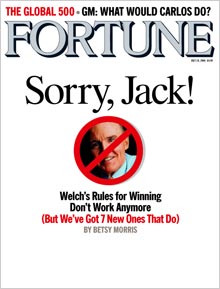
New rule: Admire my soul. Old rule: Admire my might.  NEW YORK (Fortune) -- Today bravado is dangerous. Soft-drink companies became bad guys when they were slow to leave the school lunchroom. Nike (Charts) got smacked by sweatshop allegations. Try surfing wakeupwalmart.com to see how powerful a critical community of Internet activists can be. That old notion that has served Goldman Sachs so well is creeping back into vogue: It's okay to be greedy as long as it's "long-term greedy."
Says Isdell at Coke (Charts): "I do not [agree with] Milton Friedman - that the role of the corporation is solely to make money. Our legitimization in society is a very important part of what we do." Having a "soul" as a corporation is more than contributing to causes or being transparent about executive compensation or adhering to environmental regulation (though it is certainly all of those things). It is defining a company's vision in a sustainable, long-term way - and to hell with what the hedge funds or other pay-me-now investors say. CEOs must get better at courting long-term investors - explaining their strategies, saying exactly what they intend to do, avoiding the temptation to sugarcoat. "There is so much pressure to hit your numbers," says Genentech's Levinson. "I've been very clear with Wall Street since 1995 that if we see an opportunity to make better drugs and more money down the road at a short-term cost, we will do that every time. And you need to know that's the kind of company we are." That's easier to do, of course, when you're a glamorous, fastgrowing little biotech. So it raises the question: Does the rest of corporate America have the moral fiber to defy the present, when needed, and focus on the future? And do shareholders have patience enough to support them? In other words, are they willing to be long-term greedy - or are they just greedy? Next: ________________________________________________ REPORTER ASSOCIATE Patricia Neering |
|