|
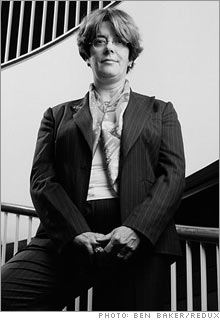
Banking on the future The CEO of JP Morgan Chase Treasury and Securities Services discusses the bank's forward-thinking strategies.  NEW YORK (Fortune) -- Fortune interviews Heidi Miller, CEO, JP Morgan Chase (Charts) Treasury and Securities Services: Thinking about business challenges while running the business is its own challenge. Last year, forward-looking strategy took more of a backseat because we needed to deal with merger-related activity and fixing the factory floor. This year I'm finally able to step back.
My business is the payments and securities piping - the critical boiler room of the bank. When I think ahead, I have to plan for price compression. Whether it's custody, asset servicing, trade, or payments - every single one of my products has had significant price compression. What do I do about it? My scale should help me, so I better have the best efficiency and operating costs out there. First I'll look at my existing customers to determine if I can boost business growth by providing them with additional products. At the same time, I'll look at my penetration in a client segment. There are some industries, like asset management, where I work with every single major player. But in other industries I need to extend my reach. Then I have to tackle a bigger issue, which is how to expand internationally. Our international revenues are approximately 30 percent of our total revenues, a smaller share than is the case for Citigroup (Charts) or HSBC (Charts). There are short-term adjustments I can make, like putting more sales people into some regions, and longer-term ones like developing targeted product features. Another longer-term challenge is payment innovation, since I worry that non-bank competitors will be more nimble in creating answers to evolving customer needs. Stored valued cards are a great example for us: we helped to develop them, we sold them to FEMA during Hurricane Katrina, and now we're packaging them as solutions for insurance companies. They're cost-effective, and they're easier for the customers. That's the kind of thing we want to be doing more and more. --Interviewed by Eugenia Levenson Avon: 'Now Is the Time to Invest' Xerox: 'We Saw the Opportunity' |
|