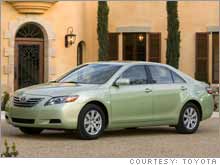
Hybrid lovers: The honeymoon may be overAs the reality of fuel efficiency sinks in, fewer new car buyers are considering a hybrid, according to J.D. PowerNEW YORK (CNNMoney.com) -- The percentage of car shoppers considering hybrid vehicles has declined in the past year, according to a survey released Tuesday by J.D. Power and Associates. Fifty percent of new vehicle shoppers surveyed said they are considering a gasoline/hybrid electric vehicle. That's down from 57 percent last year.
"In the 2006 study, we found consumers often overestimated the fuel efficiency of hybrid-electric vehicles, and the decrease in consideration of hybrids in 2007 may be a result of their more realistic understanding of the actual fuel economy capabilities," said Mike Marshall, director of automotive emerging technologies at J.D. Power. Interest in hybrid vehicles declined the most among younger shoppers. Last year, 73 percent of car shoppers between ages 16 and 25 said they were interested in a hybrid vehicle. This year, 60 percent were. Car shoppers also said they were willing to pay an extra $2,396 for a hybrid powertrain while expecting a fuel economy improvement of 18.5 miles per gallon. In last year's survey, buyers said they were expected to pay an additional $5,250 for a hybrid car and they expected to get an additional 28 miles per gallon. Meanwhile, consideration for diesel-powered vehicles stands at 23 percent. Last year, only 12 percent of car shoppers considered purchasing one. New clean-diesel models, which have much cleaner exhaust than older versions, have just begun appearing on the market this year along with the low-sulfur diesel fuel needed to run them. Shoppers expected to pay $1,491 extra for a diesel powertrain. They also expected to get about 15 mpg better fuel economy. In last year's survey, buyers expected to pay an additional $2,800 for a diesel-engined vehicle and they expected to get an additional 21 miles per gallon. "As the automotive industry steadily offers more alternative powertrain/fuel options to consumers, buyer preferences will continue to shift the market in the coming years," said Marshall. " The consumer research company also released an Automotive Environmental Index which ranks auto companies and specific models according to their fuel economy and emissions as determined by data from the Environmental Protection Agency and vehicle owners. Toyota was the highest-ranking car brand in J.D. Power's Automotive Environmental Index, followed by Volkswagen and Honda. This is the second year J.D. Power has released that Index and Toyota has moved up six rank positions since last year. The index is based on a car's emissions as reported by the U.S. Environmental Protection Agency and its fuel economy as reported by the EPA and by drivers responding to a separate survey by J.D. Power. Of the top 30 vehicles in the J.D. Power index, 10 were hybrids from Ford (Charts, Fortune 500), General Motors (Charts, Fortune 500) and Toyota. Toyota, including its Lexus luxury brand, had more vehicles in the list than any other manufacturer. |
|