A smartphone's BFF: Teens and tweensTeen mobile phone usage is way up, and the younger consumers are hungry for new wireless capabilities. Some device makers are finally starting to catch on, writes Business 2.0's Michal Lev-Ram. (Business 2.0 Magazine) -- Forget checking email on your cell phone - that's soo 2004. Today's teens are doing much more with their mobile devices. Speed texting with their eyes closed is only the beginning, and the technology can barely keep up with their rising demand for new features. That's exactly why adolescent consumers are a desirable demographic for phone makers and carriers hungry for data revenues - $5 a month charges for unlimited messaging and $1 song downloads, to name just a few examples - as the cost of a call per minute continues to decline.
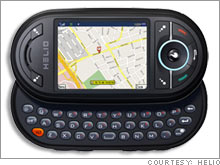
In just two years, the number of teenage cellular subscribers has grown by nearly 26 percent (that's a full 10 percentage points above the growth rate of 45- to 54-year-old customers for the same time period). And there's ample evidence that teens want advanced capabilities on their phone. The same can be said for tweens - the 8- to 12-year-old crowd. So why not make a smartphone geared toward teens and tweens? After all, they're the ones who are driving some of the most advanced mobile trends. "This is a group that has never known the world without mobile phones, and they've come to expect a lot from their devices," says Mark Donovan, a senior analyst with Seattle-based research firm M:Metrics. "For just about every category of mobile media activity, if you look at the 13- to 17-year-old bracket they're doing more things with their phones than the average phone user." According to a recent survey by M:Metrics, 47 percent of teenagers take photos with their mobile device - that's twice the industry average. Young adults also access social networks, share pics and videos and browse the mobile Web a lot more than their older, less tech-savvy counterparts. But despite teens' hyperactive mobile activities, smartphones like Research in Motion's BlackBerry (dubbed "CrackBerry" by some addicted users) and Palm's Treo have been largely geared for the business user - older corporate customers perpetually tethered to their email. It's true that smartphones are expensive to develop and build, and that the underage crowd isn't exactly the one with the most spending power. But recent mobile devices like the slimmed-down Motorola Q and the Blackjack by Samsung have already pulled smartphone prices down - they're selling for as little as $100 (with a 2-year contract, of course). The new generation of phones are also sleeker and more multimedia-focused than their predecessors. "They don't want to walk around with a phone that makes them look like a dork," says Donovan. "Style and capabilities should go hand in hand." It turns out kids don't want phones that look like they're made for kids. Case in point: Earlier this year, AT&T discontinued a child-centric, simplistic five-button phone it started selling in 2005 due to what analysts say were lackluster sales. The maker of the AT&T phone, a Lincolnshire, Illinois-based company called Firefly Mobile, has since gone back to the drawing table to create a more souped-up phone for tweens. Dubbed the FlyPhone, the upgraded device will have a lot more than "call mom" and "call dad" buttons - it will include a camera, MP3 player, games and picture-sharing capabilities. "Kids aren't afraid of technology," says Don Deubler, founder of Firefly. "The new phone allows them to do more things they want to do." The FlyPhone will be available through Firefly's Web site and retail channels like Target (Charts, Fortune 500) stores by late September. According to Deubler, the device will retail for $125 without a contract. Other phone makers and carriers are also edging toward more advanced devices for younger consumers. Helio, a small Los Angeles-based mobile operator that actually leases its spectrum from Sprint, launched the Ocean - a youth-centric feature-filled mobile device with two sliding keypads - last March. With its full-QWERTY keyboard, GPS service and a MySpace application, the Ocean comes close to a smartphone for teens, though at $295 (the price at which the device is offered to new Helio subscribers), it's still beyond the reach of many of them. What's more, as a mobile virtual network operator (MVNO), Helio's reach is limited as well. As of last released count, the company had 100,000 subscribers - peanuts compared to any one of the big four mobile operators' numbers. So will the big players - Sprint (Charts, Fortune 500), AT&T (Charts), Verizon (Charts, Fortune 500) or T-Mobile - start to catch on and market innovative, lower priced smartphones specifically made for young people? "Teens have a big interest and activity online," says Donovan, the M:Metrics analyst. "It's natural to think you'll see more smartphone penetration among them." |
|