


The dangers of ethanol
Rising gas and food prices show the risk in economic miracles.


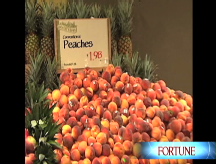
(Fortune Magazine) -- Now that milk and gasoline can cost $3.50 each, filling up your grocery cart or SUV has become an exercise in pain. Most people just wince, pay, and get along as best they can. But someone like me can't help but see these price spikes as a nasty side effect of America's ethanol program. How nasty? Think of the recent film starring Will Smith, "I Am Legend."
You might ask what the connection is between a half-baked energy policy and overdone sci-fi. Answer: the unanticipated consequences of supposed miracle cures.
Ethanol first. This corn-into-fuel program has been around for years but gained vast new impetus from President Bush's program to cure America's "addiction to oil" by using biofuels. We'll grow our way to self-sufficiency. Oh, well. Not only are oil prices at all-time highs (in dollar terms), but diverting agricultural land to energy production is a major factor in the rise of worldwide food prices. We've had food riots in Mexico and Egypt. Even in the U.S., Costco and Sam's Club are rationing rice. Creepy.
Now to sci-fi: If you've seen "I Am Legend," you know that its premise is that a cancer vaccine - your classic miracle cure - backfires by starting a plague that wipes out most of the human race and turns almost all the survivors into zombies. Sure, I'm being a bit over-the-top here, but the parallel to the ethanol situation is obvious - if something seems too good to be true, it probably is.
Had the Bush administration and Congress exhibited the wisdom and courage to slap a big honking gasoline tax on drivers after 9/11 - or even in 2006, when the President made his "addiction to oil" speech - it would have been a better energy policy than the cornographic panacea they've given us. We could have reduced consumption, cut oil imports, kept low-income drivers whole by rebating their gas taxes with income tax breaks, and used the rest of the proceeds for deficit reduction or something else useful. Food would be cheaper. So would fuel, because demand would be lower and we'd probably have fewer financial speculators, who some experts think are responsible for $25 worth of oil's march from $64 a barrel a year ago to $119 as Fortune goes to press.
So in avoiding a gas tax, we have not avoided higher prices. We've also done something that should horrify anyone who cares about this country: transferred hundreds of billions of dollars of our wealth to oil-producing countries, many of which don't exactly share our society's values of tolerance and freedom. (Can you say Russia? Or Saudi Arabia?)
Even with gas at $3.50 a gallon, I'd be more than willing to pay a much higher gas tax than I do now because it would knock down demand, cost less in the long run, and demonstrate that the U.S. is willing to do painful things in the present to ensure our future prosperity. Turning biological waste like wood chips into fuel makes a lot of sense. But devoting vast acreage of America's breadbasket to fuel - about a third of the U.S. corn crop is dedicated to ethanol - is a really terrible idea, as we're now seeing. Supposedly miraculous and painless cures have a nasty tendency to backfire. Both in scary movies and in the even scarier real world.
***
On another front, I'd like to briefly revisit what I wrote two weeks ago about the increased limit on "conforming" mortgage loans, which is part of the economic stimulus package. At the time, I didn't realize that these loans (of up to $729,750) would carry higher interest rates than loans at the previous limit ($417,000). So my math was wrong, for which I apologize. My point, however, is still valid. Even at rates about three-eighths to half a percentage point higher than regular conforming loans, these "conforming jumbos" are still cheaper than regular jumbos. That means that people in my home-price bracket still benefit significantly from the higher limit because we can finance our houses more cheaply or sell them at a higher price than we'd otherwise get. 


-
 The retail giant tops the Fortune 500 for the second year in a row. Who else made the list? More
 -
 This group of companies is all about social networking to connect with their customers. More
 -
 The fight over the cholesterol medication is keeping a generic version from hitting the market. More
 -
 Bin Laden may be dead, but the terrorist group he led doesn't need his money. More
 -
 U.S. real estate might be a mess, but in other parts of the world, home prices are jumping. More
 -
 Libya's output is a fraction of global production, but it's crucial to the nation's economy. More
 -
 Once rates start to rise, things could get ugly fast for our neighbors to the north. More









