


Why oil prices will tank
Arguments that $4-a-gallon gas (or even higher) is here to stay are dead wrong. Housing's boom-and-bust cycle tells you why.

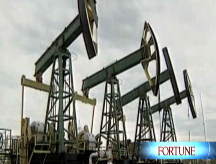

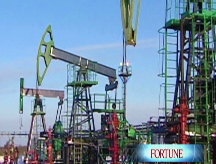
NEW YORK (Fortune) -- High-flying tech stocks crashed. The roaring housing market crumbled. And oil, rest assured, will follow the same path down.
Not everyone agrees. In an echo of our most recent market frenzies, some experts pronounce that the "world has changed," and that the demand spikes, supply disruptions, and government bungling we face now will saddle us with a future of $4, $5 or even $10 a gallon gasoline.
But if you stick to basic economics, it's clear that the only question is when - not if - prices will succumb.
The oil bulls are correct in their explanations of why prices have jumped, to a record $138.54 a barrel on Friday. It's indisputable that worldwide demand has surged, chiefly driven by strong growth in China, India and the Middle East. It's also true that most of the world's reserves are controlled by governments in places like Russia and Venezuela that mismanage production, thus curtailing supply growth.
But rather than forming a permanent new plateau for prices - as the bulls contend - those forces are causing a classically unstable market that's destined for a steep fall.
In a normal oil market, the cost of producing the last, most expensive barrel of oil needed to satisfy worldwide demand sets the price for every barrel the world over. Other auction commodity markets work much the same way.
So even if Saudi Arabia produces at $4 a barrel, if the final, multi-millionth barrel required to heat houses and run cars costs $50, and is produced, for argument's sake, at a flagging field in West Texas, the world price is $50. That's what economists call the equilibrium price: It's where the price that customers are willing to pay meets the production cost, including a cushion, naturally, for profit or "the cost of capital."
But today, the sudden surge in demand and the production bottlenecks have thrown the market radically out of balance.
Almost exactly the same thing happened in the housing market. And both housing and oil supply react to a surge in demand with a long lag. In housing, the lag is caused by restrictive zoning and development laws, especially in coastal markets like California and Florida.
So when the economy roared back in 2002 and 2003, builders couldn't turn out homes fast enough for buyers armed with those cheap mortgages. As a result, prices spiked. They no longer bore any relation to the actual cost of buying and improving land, or constructing and marketing a new house (at some reasonable profit margin). Instead, frenzied buyers were setting the price.
Because builders were reaping huge windfall profits, they rushed to buy and develop land. And sure enough, those new houses were ready just as buyers were retreating to the sidelines because they could no longer afford to buy a home. That vast overhang of unsold homes is what's driving down prices today.
The story is much the same with oil, with a twist. A big swath of the market isn't really paying that $125 a barrel number you hear about seemingly every hour. In China, India and the Middle East, governments are heavily subsidizing oil for their consumers and corporations, leading to rampant over-consumption - and driving up prices even more.
But sooner or later the world won't keep paying those prices: Eventually, the price must fall back to the cost of that last barrel to clear the market.
So what does that barrel cost today? According to Stephen Brown, an economist at the Dallas Federal Reserve, that final barrel costs just $50 to produce. And when the price is $125, the incentive to pour out more oil, like homebuilders' incentive to build more two years ago, is irresistible.
It takes a while to develop new supplies of oil, but the signs of a surge are already in place. Shale oil costing around $70 a barrel is now being produced in the Dakotas. Tar sands are attracting investment in Canada, also at around $70. New technology could soon minimize the pollution caused by producing oil from our super-plentiful supplies of coal.
"History suggests that when there's this much money to be made, new supplies do get developed," says Brown.
That's just the supply side of the equation. Demand should start to decline as well, albeit gradually.
"Historically, the oil market has under-anticipated the amount of conservation brought on by high prices," says Brown. Sales of big cars are collapsing; Americans are cutting down on driving. The airlines are scaling back flights.
We've learned another important lesson from the housing market: The longer prices stay stratospheric, the worse the eventual crash - simply because the higher the prices and bigger the profit margins, the bigger the incentive to over-produce.
It's even possible that, a few years hence, we could see a sustained period of plentiful oil supplies and low prices, meaning $50 or below.
A similar scenario occurred following the price explosion in the 1970s and early 1980s. The price spike caused the world to cut back sharply on oil consumption. By the mid-80s, oil prices had fallen from almost $40 to around $15. They remained extremely low for two decades.
It's impossible to predict how the adjustment this time will take shape, just as it was in housing. There the surge in supply came in places the experts swore there was "no supply," and wouldn't be any. Builders found a way to extend vast tracts of homes into California's Inland Empire and Central Valley, and even build "in-fill" projects near the densely-populated coasts.
An earlier bubble is also instructive. In the early 1980s silver prices jumped from $10 to $50 on the theory that the world was facing a permanent shortage of silver. Suddenly ads appeared asking homeowners to bring their tea sets and jewelry to Holiday Inns for a big price. Silver supplies poured from seemingly nowhere, out of America's cupboards, of all places.
And so it will be with oil. We don't know where the new abundance will come from, from shale, or tar sands or coal or an OPEC desperate to regain market share. We just know that it will appear. With prices like these, it always does.
Is Tully right? Join the reader debate here. 


-
 The retail giant tops the Fortune 500 for the second year in a row. Who else made the list? More
 -
 This group of companies is all about social networking to connect with their customers. More
 -
 The fight over the cholesterol medication is keeping a generic version from hitting the market. More
 -
 Bin Laden may be dead, but the terrorist group he led doesn't need his money. More
 -
 U.S. real estate might be a mess, but in other parts of the world, home prices are jumping. More
 -
 Libya's output is a fraction of global production, but it's crucial to the nation's economy. More
 -
 Once rates start to rise, things could get ugly fast for our neighbors to the north. More









