Bailout talks carry on
President and leading lawmakers seek to reassure markets rescue will pass, and that negotiations are back on track.






NEW YORK (CNNMoney.com) -- Capitol Hill negotiators spent Friday working on details of a $700 billion financial rescue plan while President Bush and leading lawmakers offered assurances that Congress and the administration would get a deal done.
"I believe great progress is being made. We won't leave until we have legislation signed by the president," said House Speaker Nancy Pelosi, D-Calif., told reporters late Friday afternoon.
President Bush, a few minutes after the U.S. stock markets opened on Friday, said he was certain a bill would get finished. "The legislative process isn't pretty, but we are going to get a rescue package passed," he said.
Bush summoned lawmakers and the presidential candidates to the White House on Thursday to rally consensus behind his plan. Instead, the meeting revealed a deep split between Democrats and House Republicans. Late-night talks between lawmakers and Treasury Secretary Henry Paulson failed to result in an agreement.
On Friday morning, Republican presidential nominee John McCain, R-Ariz., was in talks with House and Senate Republican leaders to see if an agreement could be reached. Some in the GOP were pushing a hybrid plan that contained elements from the administration's proposal to buy toxic assets from banks and principles laid out by House Republicans.
House Republicans say they want Wall Street to pay for its mistakes in a "workout" - not a bailout by taxpayers.
Meanwhile, Senate Democratic leaders were angry that the debate had gotten entangled by presidential politics. They said they had come close to working out an agreement with House Democrats, Senate Republicans and one leading House Republican, Spencer Bachus, R-Ala.
"It's fair to say we're making progress," said Senate Majority Leader Harry Reid, D-Nev., on Friday morning. "The time is now for House Republicans to come to the negotiating table and for presidential politics to leave the negotiating table. Insertion of presidential politics has ... been harmful."
Late Friday morning, House minority leader Rep. John Boehner, R-Ohio said he was sending a House Republican to the bipartisan discussions on the Hill.
House and Senate leaders say they want the bill to gain bipartisan support because it represents such a big policy effort for the U.S. government. They also lack the necessary votes to pass it without Republicans on board, Pelosi said. Some members still object to the fact that the bill lacks provisions that would allow the government to recover the rescue's costs or allow bankruptcy judges to modify the primary residence mortgages of filers, she explained.
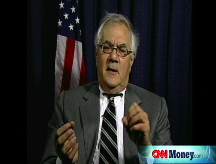
Late Friday afternoon, House Financial Services Chairman Barney Frank, D-Mass., told reporters that the staffs of both parties from the House and Senate were negotiating the legislation.
The core of the bill, he said, was the proposal put forth by Paulson that would allow the Treasury to buy up to $700 billion in troubled mortgage assets from financial institutions to free them up to start lending again.
House Republicans had rejected that core on Thursday, calling instead for the government to insure financial institution's mortgage-backed securities and for those institutions to fund the insurance through premiums.
Frank said that adding an insurance provision "has been an option. But there would be no point in participating [in Friday's negotiations] if you didn't accept the premise of the Paulson plan."
A call for comment from House Minority Whip Roy Blunt, R-Mo., who is representing House Republicans in the negotiations, was not immediately returned.
Many other elements of the legislation were agreed to in principle by negotiators on Friday, Frank said. They include the need for curbs on executive compensation, the need for significant oversight, the right to seek warrants for equity stakes in the companies that sell troubled assets to Uncle Sam, and restrictions on how the $700 billion would be made available to Treasury.
A Democrat close to the negotiations told CNN that while it seems likely the Senate might not vote on any bailout bill 'till Wednesday, a Sunday night vote is still possible. The timing of any House vote is unclear.
This same source says there's no reason the final deal can't include language that allows Treasury Secretary Henry Paulson to put some money into an insurance program - as House Republican have proposed.
The Democrat says Congress will not authorize the full $700 billion expenditure at once, instead it will authorized in phases. Other Democratic members say the amount of the initial allotment continues to change.
Staff level negotiations are ongoing and could continue through the night. The principal negotiators will meet again Saturday.
CNN's Jessica Yellin contributed to this report.