
Economy falls more than expected
The nation's gross domestic product fell 6.1% in the first quarter -- nearly the same pace as the end of 2008, and a much sharper drop than expected.



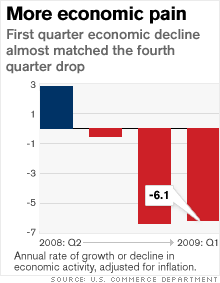
NEW YORK (CNNMoney.com) -- The U.S. economy shrank at an annual pace of 6.1% in the first quarter -- almost as much as it did in the fourth quarter of 2008, according to a government report Wednesday.
The drop was much worse than expected. According to economists surveyed by Briefing.com, expectations were for a drop of 4.7% in gross domestic product, the broadest measure of the nation's economic activity.
The first quarter decline was the second biggest drop recorded in 26 years, behind only the fourth quarter reading. GDP fell 6.3% in the last three months of last year.
Still, investors didn't appear to be too upset by the news. Major U.S. stock indexes were all up more than 1% in the first half hour of trading Wednesday.
While the overall GDP figure was disappointing, there were some signs of improvement in the report's other readings.
Purchases by individuals rose at an annual 2.2% rate, the first time personal spending rose since the second quarter of 2008. A smaller trade gap also limited the rate of economic decline.
But businesses pulled back on spending a great deal in the first quarter, as purchases of equipment and software declined at a 34% annual rate, the sharpest decline in 50 years. This drop accounted for 2.6 percentage points of the overall decline in GDP.
Businesses also slashed their inventories by more than $100 billion during the quarter, the biggest drop on record. That contributed another 2.8 percentage points to the drop in GDP. State and local governments also cut back on spending.
Robert Brusca of FAO Economics said the huge drop in inventories is good news for the economy going forward, because it will force businesses to start ramping up production again quickly once there are more signs of increased demand from consumers.
So even though the declines in GDP reported in the fourth and first quarter were similar, Brusca thinks this latest report is far more positive.
"This is the best minus 6% reading we've ever had," he said.
Wachovia economist Adam York said the sharp plunge in inventories needed to take place in order for the economy to be able to turn around.
Now that businesses have made that adjustment, York said there could be growth in the overall economy as soon as the second quarter. But he cautioned that growth was more likely to resume in the second half of this year.
"We're in the light at the end of the tunnel camp," he said. "This sets us up for a traditional business cycle recovery."
Still, the economic decline during this recession, which started in December 2007, has been one of the deepest since the Great Depression.
Since the second quarter of 2008, when nearly $100 billion in stimulus checks sent to taxpayers caused a spike in spending, overall economic activity has dropped by 3.3%. That's the biggest three-quarter decline since the government started calculating GDP on a quarterly basis in 1947.
The first quarter report comes as the Federal Reserve is set to wrap up a two-day meeting later Wednesday. Investors will be watching closely to see what the central bank, which has cut rates to nearly 0% and taken other measures to try to revive the economy, says about the economic outlook. 



