

The downsizing of the U.S. consumer
Shoppers are spent; you'll need to look for other sources of growth in your portfolio.



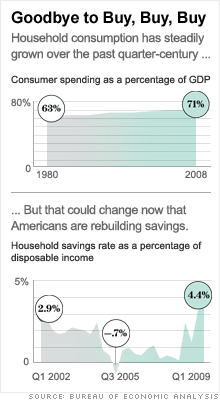
(Money Magazine) -- Old: There's been one stalwart the economy could count on for the past quarter-century: you, the American consumer.
Name any calamity in recent memory -- the savings-and-loan crisis of the late '80s and early '90s, the bursting of the tech bubble in 2000, and even 9/11. Each time, you came to the rescue by opening your wallet and going shopping.
Rising stock prices, falling tax rates, and a seemingly endless supply of cheap credit helped. So did a housing boom that allowed homeowners to raid their equity. No wonder spending grew to more than 70% of GDP (see the chart).
New: The plunges in housing and stocks, rising unemployment, and tighter lending standards have made the consumer the problem, not the solution.
"We've been talking about living within our means for a long time, and now we're going to have to walk the walk - there's no choice," says Diane Swonk, chief economist of Mesirow Financial.
Spending dropped 4.3% in the fourth quarter of 2008, and continues to be sluggish this year. At the same time, the household savings rate, which hovered near zero in recent years, climbed above 4% of disposable income in the first quarter.
Economists don't think this behavior will change after the recession as families work to repair their finances. As a result, the U.S. economy is likely to grow at a slower pace than its usual annual rate of 3%. Economies in emerging markets, like China, will likely be the new drivers of global growth.
Focus on U.S. exporters. If demand for goods and services from emerging markets grows, that will boost the fortunes of U.S. firms that sell abroad. So too would a prolonged period of dollar weakness, which could take place if the U.S. is no longer viewed as the world's economic backstop.
"In this new landscape, spending at home will be less of an engine of growth while exports will become more of one," says IHS Global Insight chief economist Nariman Behravesh.
A simple way to gain exposure to exporters is through a mutual fund that owns a broad mix of U.S. multinationals, like T. Rowe Price Blue Chip Growth (TRBCX), which includes Microsoft (MSFT, Fortune 500) and Wal-Mart (WMT, Fortune 500) among its top 10 holdings and is in the Money 70, our list of recommended funds.
Once the recession ends, business spending here and abroad should rebound. This bodes well for tech. In 2009, purchases of IT goods and services will hit nearly $2 trillion - and two-thirds of that will come from abroad.
The easiest way to invest: iShares S&P North American Technology-Software (IGV). Says Swonk: "U.S. firms have the technology that China and India are going to be needing to increase their productivity."
The demise of the 'ownership society'
The rise of freelance nation
The era of new regulation
The return of volatility 



