Garbage in, profits out
A hazardous-waste disposal firm cleans up.



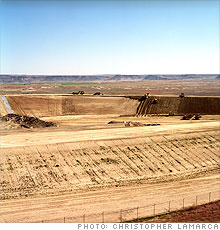 |
| American Ecology, started in 1952 to clean up radioactive waste, makes some of the most polluted sites in the U.S. look like virgin land. |



(Fortune Small Business) -- One FSB 100 company has grown by grabbing a giant share of something almost nobody else wants to touch -- garbage. Not just any trash, but gooey oil-refinery sludge, contaminated Superfund mystery material and radioactive protective clothing. American Ecology (ECOL) specializes in processing (and in some cases recycling) some of the nastiest hazardous waste there is, including low-level radioactive waste and PCBs.
In this highly regulated industry, waste-management companies must follow detailed Environmental Protection Agency guidelines for transporting, processing and disposing of various hazardous-waste products. For example, regulations spell out how far disposal sites must be located from groundwater.
In the early 1980s a flurry of Earth-friendly laws were passed, triggering a run of hazmat startups capitalizing on the new regulations. Each promoted a different disposal method -- such as incineration on offshore barges and propelling trash into outer space -- but the volume of hazardous waste decreased as Superfund sites were cleaned up and companies implemented safe disposal practices.
"Many early firms went out of business as the industry consolidated in the '90s," says Bruce Parker, CEO of Environmental Industry Associations, a trade group in Washington, D.C. Still, a small number of businesses that specialize in hazardous-waste disposal remain.
American Ecology, which was founded in 1952 to provide radioactive-waste removal, is one of the largest of them and today disposes of other kinds of hazardous waste as well. (The company does not handle high-level radioactive waste, such as spent nuclear fuel.) American Ecology employs 253 and operates four locations -- in Idaho, Washington, Texas and Nevada -- that handle the collection and disposal of a range of industrial waste. It now gets rid of some material, such as leftover minerals from uranium refineries, by sealing it in thick-walled drums and burying them deep underground in storage areas that meet federal and state guidelines. The company treats most other hazardous waste by either recycling some materials or rendering them inert. Most post-treatment waste is later buried at disposal sites.
Recycling -- and the sale of the recycled material -- is a growth area for trash-disposal companies, according to Lynn Brown, a spokesperson for industry giant Waste Management (WMI, Fortune 500) in Houston.
"Our goal for 2020 is to triple the amount of materials we recycle," Brown says. As with most large waste-disposal companies, Waste Management handles very little hazardous material, creating an opening for smaller firms.
Although recycling options for hazardous waste are limited, American Ecology CEO Steve Romano is finding innovative ways to generate business. Last year the company built a recycling center in Robstown, Texas, that treats and recycles oil sludge from refineries and sells the reclaimed oil. American Ecology's success there has Romano looking for ways to expand its recycling efforts.
"We're very excited about it," Romano says. "We believe there is a substantial market for reclaimed oil -- and also for metals recycled from refineries."
The company also maximizes efficiencies by sometimes using one type of waste to treat another. For example, bleach sent for disposal can be used to break down some of the organic chemicals from gasoline spill-related waste.
"Treating waste with waste is efficient, and we're always looking for opportunities to do that," Romano says.
Over the past three years, the company has invested in a fleet of 450 railcars, some specially built, to move hazardous waste to Idaho from as far away as New Jersey. American Ecology is now transporting more than a million tons of chromite-contaminated material from Jersey City to Grand View, Idaho, where the company operates a 1,300-acre disposal site. The waste comes from a former chrome factory that dumped its industrial trash in its backyard before environmental regulations took effect. About half of American Ecology's business comes from such "legacy" sites.
Investing in infrastructure has paid off. American Ecology showed record growth last year, processing 1.2 million tons of waste in 2008, a 7% increase. Revenues were $176 million, with net income up 11%, to $1.18 a share.
"Our services are necessary in good times and bad," Romano says. He has his eye on President Obama's proposal to reinstate the oil-industry tax, which would create a billion-dollar annual fund for environmental cleanup. "Many of these sites will take years," he adds.
In the meantime, it appears that American Ecology with continue to clean up. 
The FSB 100: Full coverage
What do you think of this year's FSB 100 picks? Have your say.
Meet No. 1: Life Partner Holdings
5 small stocks ready to soar
Thriving in hard times

-
 The Cheesecake Factory created smaller portions to survive the downturn. Play
 -
 A breeder of award-winning marijuana seeds is following the money and heading to the U.S. More
 -
 Most small businesses die within five years, but Amish businesses have a survival rate north of 90%. More
 -
 The 10 most popular franchise brands over the past decade -- and their failure rates. More
 -
 These firms are the last left in America making iconic products now in their twilight. More