
U.S. about to hit debt ceiling - again
The $12.1 trillion debt ceiling is fast approaching 'over the limit' status. Unless Congress raises it, Uncle Sam won't be able to pay what the country owes.



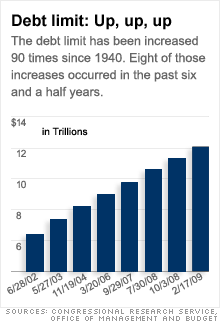

NEW YORK (CNNMoney.com) -- Congress has raised the debt ceiling four times in the past two years and will probably have to do it again in the next month.
With the government borrowing record amounts of money, the nation's current debt ceiling of $12.1 trillion will be pierced soon.
That ceiling is the cap on how much the country allows itself to have in debt. In credit card parlance, the ceiling is the U.S. credit limit. At the end of August, U.S. debt totaled $11.8 trillion. That's roughly $349 billion shy of the statutory limit.
The ceiling is meant to serve as a brake on spending because lawmakers would have to think very seriously before they breach the limit and take a very difficult political vote to do so. In reality, lawmakers really don't have a choice but to raise the ceiling and they know it.
Put simply, if they don't raise the ceiling, the country will go into default on its debt. The domino effect would be painful, to say the least.
Treasury bonds would come due but the Treasury wouldn't have the authority to borrow more money to pay holders of those securities.
The government might be able to come up with some cash by, for instance, borrowing from the federal employee retirement trust fund.
The Treasury Department also said Wednesday that it was taking steps to "preserve flexibility" in how it manages its debt. It will reduce the amount of money in its financial rescue reserve -- essentially setting aside cash in the event that lawmakers don't raise the ceiling in a timely manner.
But such measures can only stave off the inevitable temporarily. After Treasury exhausts its options, barring an increase in the ceiling, the value of U.S. bonds, would sink, jeopardizing the portfolios of countries and investors around the world who invest in U.S. debt.
"Our credit as a nation would plummet immediately and throw the world economy into a depression," said Charles Konigsberg, chief budget counsel for The Concord Coalition, a deficit watchdog group.
The debt ceiling was implemented decades ago. Lawmakers have raised it 90 times in the past 69 years, according to data from the Office of Management and Budget.
Earlier this year, the House passed a joint resolution that would raise the debt ceiling to $13.029 trillion for fiscal year 2010. The Senate has yet to weigh in.
While lawmakers are almost certain to support an increase, the issue is expected to spark a firestorm on the House and Senate floors.
That's because the statutory debt limit is more of a political hammer used most often by whichever party is in the minority to blame the majority for the soaring debt. Konigsberg said he expects the debates in all likelihood to be "0% substance and 100% politics. It comes down to two parties arguing about who's responsible for the debt."
But one quid pro quo that fiscal conservatives might propose is an amendment to create a deficit reduction commission, which is an idea that could generate bipartisan support, he said.
In any case, the debates over the debt ceiling may be particularly heated because of the unprecedented government interventions that were launched in the past 18 months to curtail the financial and economic crises.
A debate over the debt ceiling will also intersect with the fight over health care reform, which could cost as much as $800 billion to $1 trillion over the next decade. 



