



Chairman and chief investment officer, Legg Mason Capital Management
These sorts of things are what's known to the academics as "endogenous to the system"--that is to say, they're normal. They happen usually every three to five years. So we had a freezing up of the market for corporate credit in the summer of '02. We had an equity bubble just before that. In '98 we had Long-Term Capital. In '94 we had a mortgage collapse like we're having right now. In 1990 we had an S&L collapse. In '87 we had a stock market collapse. These things flow through the system, and they're part of the system. I saw one quant quoted over the weekend saying, "Stuff that's not supposed to happen once in 10,000 years happened three days in a row in August." Well, I would think that you would learn in Quant 101 that the market is not what's known as normally distributed. I'm not sure where he was when all these things happened every three or five years. I think these quant models are structurally flawed and tend to exacerbate this stuff.
But these events represent opportunities. When markets get locked up like this, it's virtually always the case that you'll have opportunities if you have liquidity. Instead of worrying how bad it's going to get, I think people should be thinking about where the opportunities might be.
The NYSE financial index is probably the best barometer of what's to come. The financials tend to be a very good indicator of where the market's going. They tend to lead the market because they're the lubrication for the economy. So I think the financial index will tell you if this thing is over, and so far it's telling you it's not over. It's still falling. But just as financials lead on the downside, they will lead on the upside.
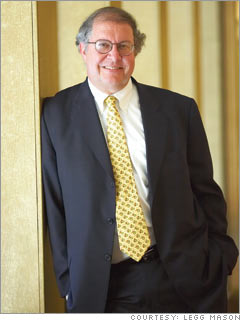
Bill Miller
| When Wall Street fails, it asks for a handout. Fortune's Allan Sloan says there must be a better way. (more) But the Treasury Secretary tells Fortune Magazine's Nina Easton that the economy is strong enough to withstand the volatility. (more) |


