

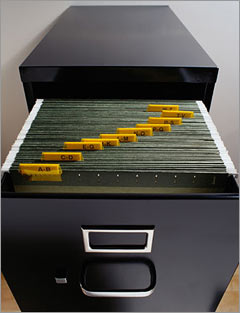


Problem: You can't find important papers when you need them
Time Involved: 15 minutes weekly, one hour a year to update
The Fix:
Why does the simple act of putting papers in a folder and the folder in a file drawer cause so much angst? The real problem, says professional organizer David Allen, author of "Getting Things Done: The Art of Stress-Free Productivity," is that people tend to overcomplicate what should be a simple process.
"People have this mystique about filing," he says. "They set up these formal structures that are way too complex. You should be able to make a file for anything and put it away in less than 60 seconds."
To conquer your clutter addiction, try Allen's three-step program:
1. Set up a file drawer just for 2007 working finances. This is where you put papers you handle often, like this year's bank, brokerage and mutual fund statements and credit card and utility bills. A simple alphabetical method will be fine: bank accounts under B, credit card statements under C.
Include a file called Taxes 2007, in which you can drop receipts for deductible expenses and anything else tax related as the year progresses; that way all of the backup will be in one place when it's time to do your taxes next year. File documents no later than a week after they arrive, ideally that very day. (Nothing sets off inertia faster than a mound of to-be-filed paperwork.)
2. Set up another general filing drawer for documents you handle less frequently, such as the deed to your home, insurance policies, appliance instructions and warranties.
3. Every April go through the current working drawer and move the files you need to keep (check the table on page 6) to more permanent storage. Again, you don't need anything elaborate; a cardboard banker's box or plastic storage bin will do. Just be sure to label the container on all sides with the date and description of contents - for example, Tax Records 2006.


