
CNNMoney.com
Companies Economy International Corrections Pre-market Trading After-hours Trading Winners/Losers/Actives Bonds Currencies Commodities World Markets Money Magazine Real Estate Taxes Jobs Ask the Expert Money 101 Autos Mutual Funds The Help Desk Loan Center Best Places to Live Ask the Expert Ultimate Guide to Retirement Retirement Calculators Best Funds Best Places to Retire Fortune Brainstorm Tech Apple 2.0 Blog Big Tech Blog Sectors and Stocks Tech Talk Resource Guide Small Business Makeovers Questions & Answers Small Business Video 100 Best Places to Launch FSB 100 Fortune Small Business Fortune 500 Brainstorm Tech Investing Management C-Suite Rankings Main Create Portfolio Edit Portfolio Create Alerts Edit Alerts

The bubbles that built America

These six bubbles - from the telegraph to the real-estate boom - show how Americans end up better off after a bubble, says the author of "Pop! Why bubbles are great for the economy" (Harper Collins).

The 1920s
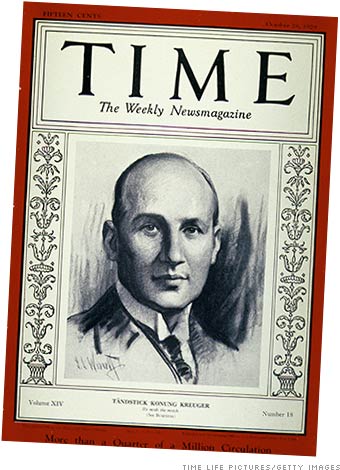
Financier Ivar Kreuger, known as the "Swedish Match King," was a leading figure in the 1920s boom. Disgraced after the market crash, he committed suicide in Paris in 1932.
The 1920s
During the 1920s, the booming stock market roped in millions of new investors, many of whom bought stock on margin. The 1920s also witnessed a larger bubble in all kinds of credit - on cars, homes, and new appliances like refrigerators. In the years after the 1929 crash, the credit-based economy fell apart. By 1933, Wall Street and the nation's banking and mortgage industries were left for dead. The searing experience helped plunge the economy into a deep depression and spooked an entire generation of investors.

In contrast to other bubble episodes, the upside lay almost wholly in the response it stimulated. As part of the New Deal, the Roosevelt Administration and Congress created a new financial infrastructure for the nation: the Federal Deposit Insurance Corporation, which made it safe for people to bank again, the Securities and Exchange Commission, which made it safe for people to invest again, and the Investment Company Act, which laid the foundation for the modern asset management business. This infrastructure helped bring into being the nation's capital-intensive, credit-driven economy and paved the way for America's global financial dominance in the second half the 20th century.
The telegraph

The railroad

The 1920s

The Internet

Real estate

Alternative energy

POP
Fortune's Adam Lashinsky explores why Silicon Valley's premier VCs have that old-time eco-religion. (more)
Robert Shiller called the tech-stock crash just as the Nasdaq peaked. But he is also the expert on the real estate market. And where does he think it's headed now? Uh-oh. (more)
© 2009 Cable News Network. A Time Warner Company. All Rights Reserved. Terms under which this service is provided to you. Privacy Policy
Copyright © 2009 BigCharts.com Inc. All rights reserved. Please see our Terms of Use.
MarketWatch, the MarketWatch logo, and BigCharts are registered trademarks of MarketWatch, Inc.
Intraday data provided by Interactive Data Real-Time Services and subject to the Terms of Use.
Intraday data is at least 20-minutes delayed. All times are ET.
Historical, current end-of-day data, and splits data provided by Interactive Data Pricing and Reference Data.
Fundamental data provided by Morningstar, Inc..
SEC Filings data provided by Edgar Online Inc..
Earnings data provided by FactSet CallStreet, LLC.