
CNNMoney.com
Companies Economy International Corrections Pre-market Trading After-hours Trading Winners/Losers/Actives Bonds Currencies Commodities World Markets Money Magazine Real Estate Taxes Jobs Ask the Expert Money 101 Autos Mutual Funds The Help Desk Loan Center Best Places to Live Ask the Expert Ultimate Guide to Retirement Retirement Calculators Best Funds Best Places to Retire Fortune Brainstorm Tech Apple 2.0 Blog Big Tech Blog Sectors and Stocks Tech Talk Resource Guide Small Business Makeovers Questions & Answers Small Business Video 100 Best Places to Launch FSB 100 Fortune Small Business Fortune 500 Brainstorm Tech Investing Management C-Suite Rankings Main Create Portfolio Edit Portfolio Create Alerts Edit Alerts

Prudent or just paranoid

Protecting your money is the smart thing to do. But how do you know when you're being too cautious for your own good?

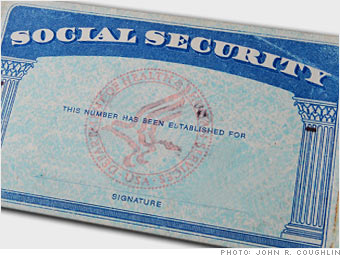
Don't hand out your Social Security number, even to your in-laws.
Advice:
Don't hand out your Social Security number, even to your in-laws.
You are smart to closely guard those prized nine digits. But it's sometimes in your best interest, even necessary, to provide the number to reputable companies and people.

Anytime a transaction generates income for you, you'll need to supply the number for tax purposes, so banks and brokerages really do need it. Beyond that, no simple rule exists.

Paul Stephens of the Privacy Rights Clearing house says you should give out the number if a prospective employer, car insurer or credit-card company, for example, is going to use it to check your credit. The number helps ensure that your report is pulled and not that of some deadbeat who shares your name.

But always ask how the number will be used and secured. If you don't like the answer, ask what happens if you don't provide it. Doctors, hospitals and insurers often ask for the number, but they don't need it (Medicare is the exception). And if your local movie store or gym wants it, just say no.

Finally, don't let your employer or any service provider use the number as your ID. As for giving the number to family members, it's true that identity thieves often know their victims. But handling in-laws isn't in Money Magazine's area of expertise.

The prudent conclusion: Ask why the number is needed and if another ID will do the trick. And don't carry the number on you.
Last updated January 17 2008: 5:45 PM ET

Out of stocks

Into gold

Planners

Credit freeze

Social Security

Big brother

Cash stash

Co-owner kids

Logging off
Holographic stockbroker? Maybe not. But these Web sites bring a virtual world of speed, simplicity and intelligence to your financial life. (more)
Money Magazine collected the best advice from some of the smartest investors (and other people) who have ever lived. (more)
Myth No. 1: You need a big income to build a big nest egg. Other myths busted: A million bucks is your magic number and what it takes to retire early. (more)
© 2009 Cable News Network. A Time Warner Company. All Rights Reserved. Terms under which this service is provided to you. Privacy Policy
Copyright © 2009 BigCharts.com Inc. All rights reserved. Please see our Terms of Use.
MarketWatch, the MarketWatch logo, and BigCharts are registered trademarks of MarketWatch, Inc.
Intraday data provided by Interactive Data Real-Time Services and subject to the Terms of Use.
Intraday data is at least 20-minutes delayed. All times are ET.
Historical, current end-of-day data, and splits data provided by Interactive Data Pricing and Reference Data.
Fundamental data provided by Morningstar, Inc..
SEC Filings data provided by Edgar Online Inc..
Earnings data provided by FactSet CallStreet, LLC.