
CNNMoney.com
Companies Economy International Corrections Pre-market Trading After-hours Trading Winners/Losers/Actives Bonds Currencies Commodities World Markets Money Magazine Real Estate Taxes Jobs Ask the Expert Money 101 Autos Mutual Funds The Help Desk Loan Center Best Places to Live Ask the Expert Ultimate Guide to Retirement Retirement Calculators Best Funds Best Places to Retire Fortune Brainstorm Tech Apple 2.0 Blog Big Tech Blog Sectors and Stocks Tech Talk Resource Guide Small Business Makeovers Questions & Answers Small Business Video 100 Best Places to Launch FSB 100 Fortune Small Business Fortune 500 Brainstorm Tech Investing Management C-Suite Rankings Main Create Portfolio Edit Portfolio Create Alerts Edit Alerts
5 of 5
BACK NEXT
Commodities for all?
Old style: Hard assets are for speculators.
New fad: They're essential now - look at oil prices.

Until recently, individual investors have largely stayed away from commodities - for good reason. Unlike bonds, hard assets such as gold or oil generate no income. They just sit there like, er, a lump of coal. Whereas stocks allow you to bet that a business will create value and grow over time, commodity investments are just a guess about prices. And those prices can swing wildly.

Commodity bulls say the world has changed, making real assets not only attractive but necessary. Thanks to demand from emerging economies like China and India, just about anything you can grow or mine is trading at or near all-time record highs. "It's unlikely we'll go back to the `good old days' of markedly lower commodity prices," says strategist Stuart Schweitzer of J.P. Morgan Private Bank.

Commodities were a great hedge against rising costs in the '70s. Between 1970 and 1981, when inflation was at 7.9% a year, hard assets gained more than 17% annually. But that was one decade. Bernstein Global Wealth Management studied commodity prices over a half-century and found they rose an average of only 2.5% a year. That's lower than the long-term rate of inflation.

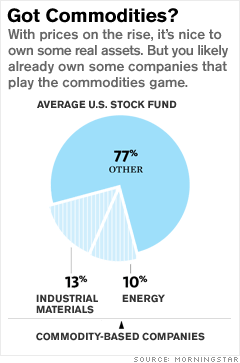
Commodities do add diversification because they move out of sync with stocks. But for most investors a commodity-related fund is optional and a 5% stake is more than sufficient; at today's prices, you can take your time getting there. "Everyone has beaten you to the punch," says Jeremy Grantham of the investment management firm GMO. Besides, you already have exposure to commodities if you own a typical U.S. stock fund, which holds nearly 25% of its assets in energy and natural-resources stocks. Ditto if you own a foreign stock fund, which likely invests in countries that produce commodities.

The verdict: Commodity plays are overrated. You need only a little and may already own some.

More galleries

Last updated July 20 2008: 6:38 PM ET
More Galleries
Women of power Shot during the Fortune Most Powerful Women Summit, these portraits showcase some of the world's most influential leaders. Photographs by Robyn Twomey. More
Better digs, less money These 6 businesses took advantage of crashed real estate prices to trade up for new stores and office space. More
Heroes of the Economy: Where are they now? In March, CNNMoney profiled people making personal sacrifices to help others during the recession. Did their efforts pay off? CNNMoney checks in. More

Special Offer
© 2009 Cable News Network. A Time Warner Company. All Rights Reserved. Terms under which this service is provided to you. Privacy Policy
Copyright © 2009 BigCharts.com Inc. All rights reserved. Please see our Terms of Use.
MarketWatch, the MarketWatch logo, and BigCharts are registered trademarks of MarketWatch, Inc.
Intraday data provided by Interactive Data Real-Time Services and subject to the Terms of Use.
Intraday data is at least 20-minutes delayed. All times are ET.
Historical, current end-of-day data, and splits data provided by Interactive Data Pricing and Reference Data.
Fundamental data provided by Morningstar, Inc..
SEC Filings data provided by Edgar Online Inc..
Earnings data provided by FactSet CallStreet, LLC.