CNNMoney.com
Companies Economy International Corrections Pre-market Trading After-hours Trading Winners/Losers/Actives Bonds Currencies Commodities World Markets Money Magazine Real Estate Taxes Jobs Ask the Expert Money 101 Autos Mutual Funds The Help Desk Loan Center Best Places to Live Ask the Expert Ultimate Guide to Retirement Retirement Calculators Rules of Retirement Best Funds Best Places to Retire Fortune Brainstorm Tech Apple 2.0 Blog Big Tech Blog Sectors and Stocks Tech Talk Resource Guide Small Business Makeovers Questions & Answers Small Business Video 100 Best Places to Launch FSB 100 Fortune Small Business Fortune 500 Brainstorm Tech Investing Management C-Suite Rankings Main Create Portfolio Edit Portfolio Create Alerts Edit Alerts

How to play by the new money rules

The shakeup in the financial system has changed the rules of managing your money. Here's a shorthand look at how to use the new rules to build wealth for your family, no matter how old you are.

2 of 3
BACKNEXT
Stage 2: The peak years
Traditional advice: You're at the height of your earning power. Make the most of it.
  • Step up saving for college and retirement.
  • Consider your growing home equity as an extra source of funds, if needed.
  • Put together the right mix of assets for key goals; then sit back and watch those investments grow.
What's changed:
  • Don't count on earning top dollar until you retire.
  • Your home actually isn't a reliable source of ready cash.
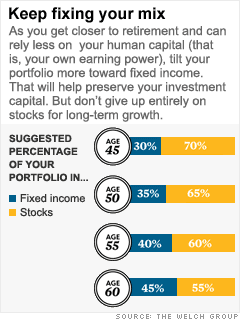
  • When it comes to your investment mix, you can't just set it and forget it.
The right moves now:

Try lowering the odds you'll get the ax. Take courses to keep your career skills current. You'll be less vulnerable in the next round of cuts and more competitive in the job market if you do get whacked. And make sure you have an emergency fund that can cover your living expenses for six months to a year.

Rely on actual cash for cash, not on your house. Don't drain your home equity to pay for ordinary consumption (no HELOC-funded vacations or flat-screens). Abuse your credit line, and you could be out of luck if you need to tap that equity in a genuine emergency (see the move above). Worse, if home prices keep falling, you could end up underwater on your mortgage.

Actively monitor your portfolio. The hands-off approach needs to yield to hands on (just ask all the pre-retirees and parents of high school seniors who've learned too late that they had too much in stocks). Keep a watchful eye to ensure that market momentum doesn't push your allocation out of alignment. Twice-a-year rebalancing will help keep you on track.

Take advantage while you can. Invest as much as you can for college and retirement while you're bringing home the big bucks. Circumstances can change fast.

NEXT: Stage 3: The wind-down
Last updated March 24 2009: 2:45 PM ET
More Galleries
What you want for the holidays In a stay-put real estate market, some of the best gifts are home-improvement tools. More
Best holiday gifts for the gadget geek Looking for the perfect present for that tech-savvy someone in your life? Try one of these affordable gadgets. More
Top-paying jobs Anesthesiologists take home a median $292,000 salary annually. What other great careers from Money and PayScale.com's list of Best Jobs in America offer big paychecks? More

Special Offer
© 2009 Cable News Network. A Time Warner Company. All Rights Reserved. Terms under which this service is provided to you. Privacy Policy. Advertising Practices.
Copyright © 2009 BigCharts.com Inc. All rights reserved. Please see our Terms of Use.
MarketWatch, the MarketWatch logo, and BigCharts are registered trademarks of MarketWatch, Inc.
Intraday data provided by Interactive Data Real-Time Services and subject to the Terms of Use.
Intraday data is at least 20-minutes delayed. All times are ET.
Historical, current end-of-day data, and splits data provided by Interactive Data Pricing and Reference Data.
Fundamental data provided by Morningstar, Inc..
SEC Filings data provided by Edgar Online Inc..
Earnings data provided by FactSet CallStreet, LLC.