How To Succeed In 2003 THE ULTIMATE GUIDE FROM THE BEST IN THEIR FIELDS
By Interviews By David Freedman, Susan Christian Goulding, Rob Howe, George Kalogerakis, Ian Mount, Evelyn Nussenbaum, and Owen Thomas

(Business 2.0) – What do you do when you come to a fork in the road? Simple: You ask for directions. And you try to ask someone who not only has been down that way before but has succeeded beyond all expectation. That, in a nutshell, is the philosophy that suffuses the next 11 pages. Looking ahead to another year in which little in business is likely to come easy, we sought out a wide range of proven leaders and asked them each a practical question about success. For some, like Michael Dell, the key is to keep doing what you have always done better than anyone; for others, like GM's Rick Wagoner, the secret is to have the guts to change. Whichever applies to you, you'll find plenty of guidance here--and rest assured, it comes from people who've lived it themselves.

THRIVE IN A SICK ECONOMY

MICHAEL DELL Founder and CEO of Dell Computer

The sudden slowdown took everyone by surprise. But we were more prepared than most of the companies in our industry because of our business model.

--We talk often and directly with our customers. And we knew from them relatively early on that demand was slowing, so we began to plan for that. We had another advantage in that all of our systems are built to order. When the market began to drag, we didn't get caught with inventory or the wrong cost structure.

--Our strategy is the same now as it has always been: We stay focused on our customers. If you provide clients with the best possible experience, then profits and growth should naturally follow, almost regardless of what's going on in the economy. Several companies have tried to copy us. They've built Web-based systems and initiated some degree of build-to-order. But cost efficiencies don't result just from that. They also come from a combination of strong supplier and customer relationships, inventory management, customer service, frictionless information flow, speed, and agility.

--Never rest. Always find ways to improve. Never stop innovating or taking risks, and keep your whole team engaged and moving in the same direction. Remember the fundamentals and maintain a solid business plan. Keep raising the bar, not just for the industry but for yourself.

BUILD BUZZ

TINA BROWN Former editor-in-chief of Tatler, Vanity Fair, the New Yorker, and Talk

--The first thing is to hire enough talent that a critical mass of excitement starts to grow. I've always believed that talented people are like dolphins--even if they don't know each other, they have an understanding of each other. So there's a kind of underground excitement that gets the thing turbocharged. The public gets wind of it, and then they begin to have a sense of anticipation.

--You can't graft buzz from some other source, like a movie or book. People think you can, but I've never found that to be true. That's "hype"--anyone in Hollywood can tell you that. There's a difference.

--I also believe in my hot list--a list I've developed over the years of lively minded people who enjoy being on the inside. If I'm going to publish a great story, I will blanket e-mail the list with an accompanying note. I know they all talk to each other. But be careful--you really have to have something to offer.

CREATE A REAL-TIME COMPANY

RICK WAGONER President and CEO of General Motors

Our reputation for being bureaucratic wasn't entirely unearned. Now we say it's better to be 80 percent right fast than 100 percent right slow. At meetings we have one hour to decide what we're going to do, and who's going to do it. Presentations and questions have to be submitted beforehand so we can focus on the important ones.

In the old days, when we had a concept car, we'd wait until it appeared in one of the car-buff magazines and then see if any readers wrote in. Now we show concept cars on a Webcast and use an Internet tracking service to get feedback. With the SSR concept car, we were hearing the next day that we had to build it.

Each week we try to go faster than we did the week before. We've cut our new-car design cycle down to as little as 18 months. Good things happen when you move quickly, because you have to think more about what really adds value.

ORDER GREAT WINE (AS IF YOU KNEW HOW)

JEAN LUC LE DU Head sommelier at Manhattan's Daniel restaurant

One night recently a party came in and the businessman who was the host didn't say anything while the client took the wine list and started ordering $300 bottles. Of course, the gentleman wasn't very happy. If the host had phoned me and discussed the wine in advance, he could have avoided that.

--Normally the person who reserves the table should choose the wine. Of course, there are times when you are bringing a client who likes wine and you want to let him shine a little bit, so you let him choose. Still, if you phone the sommelier in advance so that he knows your budget, he can help guide your guest's choices. Discreetly, of course.

--Don't to try to impress someone by ordering a $1,000 bottle. Currently, there is a backlash over corporate greed, so choose something in the mid-priced range. Even at moderate prices, you can have something truly interesting.

4 GREAT WINES FOR SHRUNKEN EXPENSE ACCOUNTS*

WHITES Seresin Sauvignon Blanc, New Zealand 2001 $43 Martin Codax Albarino, Rias Baixas 2001 $29

REDS Vietti Tre Vigne, Barbera d'Asti 2000 $42 Domaine Bressy Masson Rasteau, Cotes du Rhone 1999 $29

*Prices from the wine list at Daniel restaurant

PACK UP AND MOVE

PHIL CONDIT CEO of Boeing, which relocated last year from Seattle to Chicago

--If you're thinking about moving, put yourself at least 10 years out into the future, then look back from there. Ask questions like, What will we be doing then? What kind of space will we need? That will help you decide if you need to relocate, and where. We have a number of different businesses--aircraft, satellites, communications, missile defense--and saw no need to move them all. It wouldn't be practical. But ultimately we felt that the headquarters should be separate, in some location where we could focus more independently on general strategy and resource allocation.

--Once you decide to make a move like this, do it quickly to minimize disruption.We created a team of about 20 from human resources and other departments to research three sites: Chicago, Denver, and Dallas/Fort Worth. The team investigated commercial real estate, housing and educational opportunities, security, and transportation. As a global financial and business center with a diverse population, Chicago came closest to what we were looking for. It was just six months from the time we got board approval to the time we opened the doors in Chicago.We wanted to wrap it up by the end of August because we had people with kids in school.

--Let people feel as if they have options. We paid for what we called "familiarity trips," so some of the employees who were considering whether to move could visit Chicago. That worked very well. We ended up moving about 150 out of 500 people. If anything, the move has worked better than we'd hoped.

BET ON THE NEXT BIG THING

JANET EFFLAND General partner and head of the health-care investment group at venture capital firm Apax Partners

Ask yourself, "Will dogs eat the dog food?" Meaning, is there a true market, or are you trying to force people to do things before they're ready?

--If I'm going to fund a company, there has to be a clear, unmet clinical need for the new product. A lot of people come up with products that are incrementally better, but that's not good enough.

--Think faster, better, cheaper. For example, we funded Cytyc, which came up with a replacement for the Pap smear, which is a 50-year-old test and is fundamentally flawed.

--Be patient. Returns don't come quickly. Your first-generation products often will not be cheaper, but they'll be faster or better. The cost savings come in the second and third generations, and that's when you'll make your money.

--Management is as important as the product. We change management in the companies we fund about 40 percent of the time. A lot of MDs and Ph.D.s are very bright, but they just don't have the business experience, and I don't do on-the-job training with my money.

THREE EFFLAND WINNERS (AND ONE LOSER)

Company Product Fate

Cytyc Replacement for Pap smear Now a $1.3 billion public company

Urologix Microwave treatment for Now a $56 million public enlarged prostates company

Thermoscan Infrared thermometers Acquired by Gillette for $105 million

Biex Test for risk of premature Insurers refused to cover; labor proposed 1998 IPO aborted LEAD YOUR EMPLOYEES THROUGH HELL AND BACK

ANNE MULCAHY Chairman and CEO of Xerox, which has been pounded by recession and an accounting scandal

Communication is the most important tool of all. It's telling people how they fit into the picture and listening to what's on their minds. It's taking the tough questions in front of a group of people and, when necessary, saying, "I don't know." There is nothing more effective than face-to-face.

When I took the job as president and COO in May 2000, I met with employees at every level to collect their views. After 90 days, I put together a turnaround plan. Then we held employee town meetings to explain the plan. And when something significant appeared in the newspapers, we sent out voice-mails explaining what was going on. Through it all, we kept saying, "We'll get through this," and reminded people that we understood how much they were being asked to endure.

We also sent out letters called "team works" to people doing a good job. Sometimes we got letters back. I get somewhere between 500 and 1,000 a week from employees, and I answer a third. If people take the time to provide you input, and you take the time to respond, that's recognition in itself. People will say, "I can't believe you wrote me back."

SHAKE UP A CALCIFIED INDUSTRY

DAVID NEELEMAN Founder and CEO of JetBlue Airways

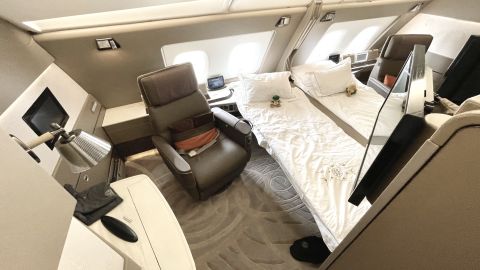
The traveling experience hasn't changed much over the last 50 years, except for the seats getting closer to your nose. So we decided to entertain our passengers with individual televisions at every seat. From our point of view as an airline, it's considerably less expensive to provide televisions than hot dinners, and they have been hugely popular with passengers.

--Offer something memorable. What are people more likely to remember? That they had their own television, or that they had another airline rubber chicken?

--Be quick and nimble. That's an advantage we had as a small company. In the wake of 9/11, we were able to install reinforced cockpit doors on all our airplanes by the end of the next month, about the time the big names were getting started.

--When possible, simplify. JetBlue has only one type of aircraft. That way we don't have to spend money and time training our pilots, flight attendants, and technicians on different models.

--Never forget who pays the bills. From the minute our customers log on to their computers or call to make reservations, to the minute they pick up their bags, we pamper them. And never get complacent. The moment you think you've made it, you're dead.

SURVIVE THE UNTHINKABLE

GLEN SALOW Executive VP and CIO of American Express, whose data centers escaped the World Trade Center attack unscathed

The story of our recovery goes back years before 9/11. By the late 1990s, we had moved all of our mission-critical technology to more remote locations. Whether you're managing hard assets or data, you can limit your exposure by avoiding densely populated, highly visible locations.

--Have disaster plans for whole campuses, not just for specific buildings. In downtown New York, we had three principal locations--the World Financial Center, 40 Wall Street, and 7 World Trade. We had to invoke all three of those disaster recovery plans concurrently, and we found we could have done it better if we had had one plan for all of Lower Manhattan.

--Train your people well and give them the confidence to act on their own. For instance, we didn't know when we were going to be able to get planes into New York. So people from some of our other sites loaded vans with the routers, PCs, and other hardware we knew we would need at a temporary headquarters and just started driving toward New York.

--Be humble in your leadership. There were days when my job was to buy pizza. When the critical item is configuring PCs to deploy on the network, I don't do that very well. I have some really smart people who do do that well, but they have to eat too.

START OVER

KATHY IRELAND Former supermodel, now founder and CEO of Kathy Ireland Worldwide

As a model, my basic job was to shut up and pose. But that gives a person time to think, and the design business I started was something I had thought a lot about.

It took me a while to figure out what I wanted to do, and I had a couple of failures on the way. In my early 20s, a friend gave me a book on making beer and I made one good batch. I immediately thought, "This is my niche and I'm putting the major brewers out of business." I ultimately did become a silent partner in a microbrewery in San Luis Obispo [Calif.], but I learned that I don't really have a passion for it, so I got out.

In your new career, be prepared to start at the bottom. Kathy Ireland Worldwide actually started with athletic socks. Now we do flooring, lighting, furniture, apparel--everything for the home. At least at first, you're probably going to make less money than before. And there is no guarantee of success. I was well aware of famous people who had started brands and failed.

You also have to realize that rejection is part of the process. There are going to be days when you look back at what you used to do and think maybe that wasn't so bad. Once in a while, when I'm crazed and busy, I joke that posing may not have been fulfilling, but it sure was easy.

STAND UP TO MICROSOFT

MICHAEL ROBERTSON CEO of Lindows, a software company that makes an open-source alternative to Windows

Did I dare Microsoft to sue us by naming my new software company Lindows? Well, Microsoft was going to come after us one way or another. Anytime you start a business that challenges the status quo, you have to expect a fight.

When you take on a giant company, you won't know what kind of battle is coming. The competition could squeeze your suppliers, wage a negative marketing campaign against you, sue you for trademark infringement, blah, blah, blah. When Microsoft sued, everyone said, "Oh, boy, they're going to get shut down." If we'd believed what we heard, we would have given up on the spot.

Find people for your management team who have been through it before. Brace your employees and your investors, and remember that they need to hear about the company's ups and downs from the CEO, not from a newspaper article.

You can win a lawsuit and still lose your business. You'll have enormous legal costs, and your competitor gets to look at your business plan and your sales numbers. But if you run the first time the bully chases you, he's going to keep chasing you. You have a shot at cohabiting peacefully if you stand up for yourself.

INVENT AMAZING THINGS

DEAN KAMEN President of DEKA Research and inventor of the Segway Human Transporter

My very best advice is what not to do. The surest way to fail as an inventor is to sit around in a vacuum thinking up ideas for things no one really needs. That's what went wrong with the dotcom industry. Instead, ask yourself what people need and how technology can be used to find a solution. For instance, sometimes people's kidneys stop working. I thought, "What can I devise to help those people?" And I came up with the first portable dialysis machine.

After you've arrived at an idea for something that could better people's lives, you have to figure out how to deliver this product at a cost that makes sense to consumers. That doesn't mean your primary focus should be on finances and getting rich quick. A sustainable business is based on its product, not on abstract ways it can make money.

Believe me, I'm not some kind of flower child. I'm a dyed-in-the-wool capitalist. But if you start with meeting the needs of society, the money will follow.

DO TIME

DAVID NOVAK Ex-convict, now a consultant to white-collar criminals

--First and most important, accept responsibility. Once there is a finding of guilt, you must leave the fight behind and concentrate on paying your debt to society. Don't carry a defensive nature into prison. The prison employees don't care what you did. You are simply a widget in their inventory. Once you realize that, it's liberating.

--Educate yourself about prison before you go. People tend to think of it as either The Shawshank Redemption, at one end of the spectrum, or as a country club where affluent prisoners play golf all day. It is not likely to be a nightmare, but it's not any fun either. I strongly suggest that your family not be there when you arrive at prison to begin your sentence. Say your goodbyes privately at home, not in the parking lot with a bunch of inmates staring at you. Have a friend drive you there, or take a cab.

--Find purpose in prison by mentoring younger inmates, sharing business skills, teaching someone how to write a resume. Prisons inventory, they don't rehabilitate. That's where you can help.

--Stay focused on the fact that prison is temporary. Think about what you're going to do on the other side. You will survive, just like the millions of other people who have survived prison.

BUILD A BETTER WEBSITE

JEREMY ANWYL President of Edmunds.com, an automotive website with over 200,000 visitors a day

Ninety percent of Internet sites miss the point. They focus on the flashiness of the technology and not on the ease of navigation.

--If anything, dumb down your site. Do a lot of usability research, which doesn't have to be expensive. Just grab some friends who haven't seen your site, give them a task, and see how quickly they perform it. You'd be surprised how much you'll learn.

--Make any user registration as painless as possible. The longer a user takes to fill out a form, the faster you'll lose him. You can help by storing consumer information and pre-populating forms, so they don't have to fill out their name and address again. You'll improve your throughput rate by two or three times.

--Increase value for the consumer. For instance, if you're selling a product, include articles about those products. Or add a town hall where users can see what other consumers are saying about certain products.

--Extend your reach by syndicating your content. If you go to AOL's automotive channel, you'll see that we provide that stuff. AOL gets to offer a bit of information, and we get the branding and traffic that result.

KEEP COOL IN A CRISIS

LT. SHANE OSBORN U.S. Navy pilot

When a Chinese jet fighter collided with our reconnaissance plane on April 1, 2001, knocking us upside down and into a dive, the first thing I thought was, "We're dead." But when you're responsible for 24 other people, you don't just give up. Knowing the crew would look to me, I calmed my fears, becoming sort of a robot and going through my checklist mentally.

The plane fell 8,000 feet before we regained control. Then it took us half an hour to reach the nearest airfield, on the Chinese island of Hainan. When the gear came down, I finally felt there was a chance.

--Compartmentalize. Until we were safe, I didn't allow myself to think about my loved ones. I could focus only on the task at hand. With almost any job, you have to do that. Otherwise you can never put work away when it should be put away or set aside family when it has to be done.

--Don't wait to build relationships with your colleagues. In a crisis, you don't want to worry whether you can rely on the people around you--or whether they feel they can rely on you. Some people think they can get somewhere alone, but you don't get successful that way. You just get lonely.

COOK FOR THE BOSS

EMERIL LAGASSE Restaurateur and TV chef

Most people, they get in a situation like this, they say, "Honey, I'm going to have the boss over," and they start thinking about how to impress him by doing something fancy. No, no, no.

--Keep it simple. If it's overly complicated, you might just as well have gone to a restaurant, sucked it up, and paid the bill.

--To start, you need an icebreaker. That can be as basic as a selection of really great crackers and cheeses. You can also make something like a jalapeno crab dip or a corn dip. You can make that the day before.

--For the main course, prepare what you do best. Don't make a chateaubriand just because you read how great it is. Don't use the boss as a guinea pig. I wouldn't do a multiple-course meal either. Not many people can pull that off. Serve a salad with fresh lettuce, tomatoes, whatever you want, and then that main dish.

Prepare a seared salmon, a roast chicken, or a basic pasta dish like bolognese. Even meat loaf with mashed potatoes can be delicious, if that's what you're good at. For dessert, seasonal is best. Get some fresh berries, throw in a little ice cream or gelato, and--bam!--everyone is happy.

Roast Garlic Chicken and Vegetables

2 3 1/2-to 4-pound whole chickens, cleaned and rinsed 12 garlic cloves, peeled 1/2 cup each coarsely chopped onions, celery, and carrots 4 bay leaves 2 sprigs each fresh rosemary, fresh oregano, leaves chopped and stems reserved 2 tablespoons olive oil 2 teaspoons salt Black pepper 4 carrots, peeled and halved vertically 4 ribs celery 4 medium onions, quartered 2 large russet potatoes, peeled and quartered 4 parsnips, peeled and halved 2 cups water

Heat oven to 450 degrees. Push 6 garlic cloves under skin of each chicken, 3 on each breast. Place 1/4 cup each of the chopped onions, celery, and carrots, and 2 bay leaves in the cavity of each chicken. Push herbs under skin of each breast and sprinkle some on skin; put herb stems in each cavity. Rub skin of each chicken with 1 tablespoon oil; sprinkle each with 1/2 teaspoon salt and 6 turns pepper. Place carrots in a large roasting pan and top, crosswise, with celery ribs to form a bed for chickens. Surround with onions, potatoes, parsnips, and water, and sprinkle with 12 turns black pepper and remaining 1 teaspoon salt. Top with chickens and roast 30 minutes. Reduce oven temperature to 375 degrees, and roast until juices run clear and meat is falling off the bones, about 40 to 50 minutes more. Remove from oven, and allow to rest 10 minutes before serving.

Recipe courtesy of Emeril Lagasse.

MAKE YOUR EMPLOYEES LOVE TO WORK FOR YOU

JIM GOODNIGHT CEO of SAS, a software company that regularly ranks in the top 10 on lists of the best places to work

I read Jack Welch's book this year, and there are some things in it I didn't buy. I find the idea that you would whack 10 percent of your employees every year preposterous. It's an enormous expense to have managers constantly ranking people. We try to minimize mindless paperwork and overhead.

Some managers do end-of-the-year reviews, but it's not mandatory. I once asked a manager why he did them. "It gives me the opportunity to sit down and talk to employees once a year," he said. I asked, "Why aren't you talking to them every day?"

We have three child-care centers on campus. Parents who have had kids that go through day care are some of our most loyal employees.

Once you offer a benefit, you can't take it away. And we ask employees what benefits they'd like us to add. Some wanted a veterinary facility where they can drop their pets off. We didn't do that.

What's really important is freedom of movement. SAS employees may work on a project for two or three years, see a posting for a new position that sounds more interesting, and change jobs; they do that regularly. If you get tired of your old job, you do something new.

KEEP THE CUSTOMER HAPPY

HELEN GREINER President and co-founder of iRobot, whose products have searched al Qaeda caves and the Great Pyramid

--First of all, listen. Not just to co-workers, but to everyone around you. What do they want? And is it something you can deliver?

For years, every time someone heard what I do for a living, they'd ask, "Do you have anything that can do my floors?" This crossed gender lines, ages, incomes. So we recognized that as an area we should be in--robotic vacuums.

--Even as your product is being developed, find ways to continue to get consumer feedback. Before working out any design, run focus groups to find out specifically what consumers want. Then do a prototype and show that to people to see what they don't like. Then you make more changes.

We do a lot of projects for the military. We set up meetings and just ask them what they need. Then we try to provide it. Earlier this year, they said they had the best optical equipment in the world but couldn't see around corners or into the caves in Afghanistan. They wanted to get information but avoid detection and reduce the risk to American soldiers. So we developed a scout robot. It's all the same: Know your consumer, and make him happy.

STAGE A MONSTER HIT

MARGO LION Broadway producer of Hairspray

There's a saying in the theater: You can't make a living, but you can make a killing. Obviously, if we all knew what would make a hit, we'd be able to make a living.

No matter how hard you try to break the rules, commercial shows adhere to certain kinds of structures. A lot of people have tried to do something new and innovative, but in the end they go back to a kind of formula that has served for decades. I look for a larger-than-life character--this is a cliche, but it always pays off--who wants something, who has obstacles thrown in his or her way, and who finds some resolution in the end.

In the end, success is in the combination of the material, the chemistry of the creative team, and the tenor of the times. It's something you never know in advance. It's always a risk.

SEE THE FUTURE

BILL JOY Chief scientist and co-founder of Sun Microsystems

If you want to predict trends, you have to understand the big forces, the ones that compound over many years.

--The strongest force over most of the last 20 years for information technology has been Moore's Law--that the amount of information you can store on a silicon chip doubles roughly every couple of years. The related advances in computer speed, memory density, and storage have radically affected prices in the computer industry, but they have also had a qualitative effect, opening up whole new worlds to innovation.

Look at file sharing. The record labels are now trying to prevent people from sharing music files. But at the rate storage cost is declining, they could ship me a box with all their music in it, and then I could license what I wanted from them. The possibilities just sneak up on you.

--The next big area to watch will be communications. Technologies like advanced digital cellular technology, ultra-wideband, and smart antennas are becoming possible because the cost of processors has dropped so dramatically. If you understand what will soon be possible in digital communications, you can see that dramatic changes are on the way.

GLOSSARY OF WHAT'S NEXT IN TELECOM

Advanced Digital Cellular

Also known as 3G (third-generation) technology, advanced digital cellular networks allow mobile phones to act as wireless data terminals--complete with high-speed Internet access and text messaging.

Smart Antennas

Unlike normal cellular antennas, which broadcast in every direction, smart antennas broadcast directly at individual users. That means fewer dropped calls and doubled network capacity.

Ultra-Wideband (UWB)

UWB uses a huge swath of radio frequencies to transmit minute pulses of information, allowing the signal to go through objects. The applications include radar imaging of buried objects (popular with the Pentagon).