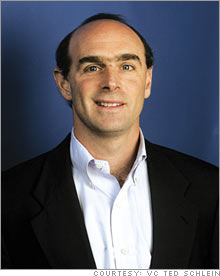
Raising taxes on VCsVenture capitalists are trying to distance themselves from their private equity cousins in order to avoid higher taxes, says Fortune's Adam Lashinsky. (Fortune Magazine) -- At first glance, private equity and venture capital are kissing cousins - same partnership structure, same investment pool, same pedigreed MBAs. But ever since the Senate Finance Committee this spring began investigating whether to tax VC and buyout profits as ordinary income (a shift that would more than double tax rates), VCs have been trying to set themselves apart from their private-equity relations in an effort to escape taxation. "We're in two different industries," says Ted Schlein, a venture capitalist at the Silicon Valley firm Kleiner Perkins. "We recruit. We help companies sell product. We do business development. [Private equity] is not an industry that can talk about creating ten million jobs."
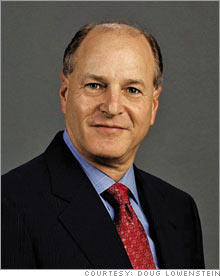
As far as the tax code is concerned, however, buyout shops and venture capital firms are one and the same. Both are partnerships that typically collect management fees of 2 percent of assets, plus a 20 percent (or greater) cut of any profits earned, known in the business as carried interest or the "carry." Because the carry - the largest payday for both camps - is computed only after an investment has proved successful, often over many years, VC and private-equity firms treat that money as a capital gain, which is taxed at 15 percent, compared with the top income-tax bracket of 35 percent. At present the tax code equates the carry with entrepreneurial risk: Bill Gates also pays the lower rate when he sells Microsoft (Charts, Fortune 500) shares because he founded the company. So far no Senate Finance Committee members have proposed legislation, but committee chair Senator Max Baucus (D-Montana) and member Senator Charles Grassley (R-Iowa) recently said the matter deserves attention. And new government scrutiny of private-equity shops has been enough to galvanize the industry into hiring its first full-time lobbyist - namely, Douglas Lowenstein, whose previous job was representing the videogame-software industry. Tax experts are split on whether the carried interest can (and should) be taxed at the same rate as a paycheck. "This quirk in the tax law allows some of the richest workers in the country to pay tax on their labor income at a low rate," writes Victor Fleischer, a former Davis Polk & Wardwell tax attorney who now teaches law at the University of Colorado. Fleischer argues that the private-equity crowd uses "gamesmanship," such as agreeing to waive its management fee and instead take a larger chunk of the profit, to further dodge the taxman. In contrast, a proposed change in the tax code enrages most of Silicon Valley's biggest venture capitalists (whose deals typically take seven years to pay out). Jonathan Axelrad, a tax lawyer at Wilson Sonsini Goodrich & Rosati who counsels numerous venture capital firms, contends there has always been a huge difference between upfront, or predictable, fees and VC profits that involve multiyear, risky investments. "If you change the fundamental rules of partnerships, it will have huge ramifications for the overall structure of the economy," he says. "The IRS has plenty of ways to tax a fee or salary. If carried interest were merely a disguised fee, it would not be difficult to tax as ordinary income." Or as Dick Kramlich, one of the founding partners of New Enterprise Associates and an early investor in Ethernet technology, puts it, "Six years of sweat and one year of pure bliss. If anything is a capital gain, that's it." Unless, of course, Congress changes the law. Reporter associate Katie Benner contributed to this article. From the May 28, 2007 issue
|
Sponsors
|