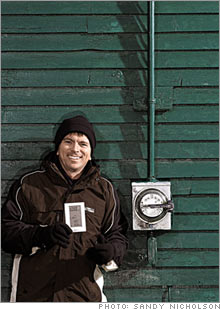
Turn off that light! Energy usage in real dollarsWith help from a curious cat, Blue Line Innovations found a way to make people more aware of how much electricity they use. The problem (FSB Magazine) -- When Danny Tuff was growing up in Newfoundland, his father often prodded him and his siblings to switch off the lights and turn down the heat. If only there were a way to plainly show how electricity translated into real money, his father used to say, people would waste less. Years later Danny and his brother Maurice launched Blue Line Innovations and chose a home meter reader as one of their first projects. The "aha!" "We wanted a device that any customer could install without the help of an electrician," Danny says. But technical hurdles seemed too high. Then one afternoon, after Maurice's cat had been chasing the dot from his laser pointer, Maurice shot a beam through the bottom of a power meter. Could that be the answer? After modifying the idea to use low-power infrared instead of a laser to track a mark on the meter's spinning disk, they dropped other projects and raised $4 million in financing. The payoff
The brothers presented their Power Cost Monitor to Ontario utility Hydro One, which found during a test that newly alert customers used an average of 6.5 percent less electricity. Hydro One bought 30,000 units, netting Blue Line a cool $4 million. Now at least 50 more utilities, including NSTAR (Charts) in Massachusetts, are eyeing the device, which is cheaper and easier to install than technologies that let people track power use online. In the end, it seems Dad was right - electricity can indeed translate into real money. Are you an entrepreneur who has found an innovative way to manage the work you do every day and to keep your schedule under control? Have you created an unusual, interesting workspace that helps you succeed? Please e-mail us your stories: The best will be featured in 2 new Fortune Small Business columns called HOW I WORK and WHERE I WORK. We are particularly interested in fast-growth companies. A biofuels startup can't deliver on its promises To write a note to the editor about this article, click here. |
Sponsors
|