 |
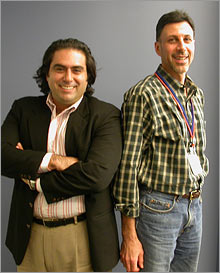
| Which CNN/Money producer makes more money? |
|
|
|
|
|
NEW YORK (CNN/Money) - Kiss that merit raise goodbye.
Good-looking, slim, tall people tend to make more money than their plain-Jane counterparts, according to a study released this month by the Federal Reserve Bank of St. Louis, with researchers finding that beautiful people tend to earn 5 percent more an hour than their less comely colleagues.
After variables like education and experience are factored out, Fed researchers said the "beauty premium" exists across all occupations, and that jobs requiring more interpersonal contact have higher percentages of above-average-looking employees.
For example, the study found there was a higher beauty premium among private sector lawyers than their government-supported counterparts since private attorneys need to attract and keep clients.
If that weren't enough, the Fed also discovered a "plainness penalty," punishing below-average-looks with earnings of 9 percent less an hour.
"Certain characteristics, such as appearance, might affect productivity in ways that are not as easily measured (or as obvious) as are other characteristics, like education or experience," said the report, adding that the effects looks have on self-confidence, communication and social skills were unknown.
Another possible explanation for the wage disparity: good, old-fashioned discrimination, said the Fed.
For example, the wage differential discovered for obesity seems to be limited to white women, the study said, belying an unmeasured productivity explanation.
Economists also found that women considered obese in terms of their body mass index (BMI) in both 1981 and 1988 earned 17 percent less than women within their recommended BMI range.
And while weight seemed to dog women, short men get the short end of the stick. Economists found a "height premium" among white men, with a 1.8-percent increase in wages for every additional inch of height over the national median.

|



