$4 gas solution: More miles per gallon
House committee explores raising fuel economy standards for American automobiles in response to record gas prices.



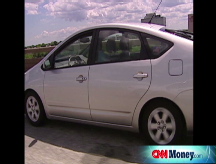
NEW YORK (CNNMoney.com) -- Oil speculation has been getting a lot of attention from Congress lately. On Thursday lawmakers took up another possible solution: getting more miles per gallon out of cars Americans drive.
Last December, Congress passed the Energy Information and Security Act (EISA), which mandated that the car standards and light truck standards be set high enough to ensure that the combined industry-wide average reaches at least 35 mpg in model year 2020.
But since then, the issue has taken on even greater urgency. Gas prices were less than $3 a gallon when President Bush signed the bill into law, but they average more than $4 today, according to AAA.
At a Thursday hearing held by Congress' Select Committee on Energy Independence, lawmakers said the nation's fuel economy efforts need to go further.
"It's our job to set the standards not the producers," said Rep. Jay Inslee, D-Wash. "We've been following them for years, and now we're lagging far behind the rest of the world."
Others agreed, citing Bush Administration studies that found the 35 mpg fuel economy standard could be introduced even sooner.
"[The Department of Transportation] said the technology is available to achieve a fleet wide fuel economy of 35 miles per gallon by 2015," said Rep. Ed Markey, D-Mass., the committee chair.
But the National Highway Traffic Safety Administration (NHTSA) - a unit within the U.S. Department of Transportation - is reluctant to force the auto industry to set that standard before 2020. That's because the DOT argued that gas prices may come down significantly in the future. The data they use, supplied to them by the U.S. Energy Information Administration, assumes gas prices will cost $2.51 per gallon in 2030.
Markey called the EIA numbers outdated.
"The Energy Information Administration assumptions simply defy reality," said Markey. "These numbers are nothing short of absurd."
But the Transportation Department said the current standards go far enough.
"These standards are tough, but achievable and necessary," said Tyler Duvall, the Department of Transportation's Assistant Secretary for Policy, in testimony before the committee. "All told, the proposal will save nearly 55 billion gallons of fuel and a reduction in carbon dioxide emissions estimated at 521 million metric tons over the life of the affected vehicles."
Some suggested increased fuel standards would devastate an already battered U.S. auto industry.
"Many in this Congress are focused on bankrupting the domestic auto industry," said Rep. Candice Miller, R-Mich. "This is an $85 billion mandate on domestic autos ... that puts the breaks on innovation."
Miller said Congress should provide the auto industry with incentives to produce more fuel-efficient vehicles rather than mandating expenditures on "an old and antiquated technology."
Duvall, the Transportation Department official, was asked by Markey whether the government should prepare for the worst and set fuel standards as if gas will continue to rise at an extraordinary pace. Duvall said no, arguing that the auto industry would lose too many jobs, as SUV and truck plants close down.
The answer prompted a heated exchange. Markey vehemently disagreed with Duvall and said the future of the auto industry lies in technological innovation.
"We've already lost a million jobs or more because of wrong estimates [about gas prices]," said Markey. "The only way to get new jobs is to get new technology."
"America's strength lies not in its oil reserves but its superior technological might," he added. "We will need to use vehicles that use no oil at all."
The committee was established by Speaker Nancy Pelosi last year to address the challenges of the nation's oil dependence and the threat of global warming.