
Analysts: Most banks are safe
Despite collapse of IndyMac, veteran analysts say banking system is in better shape than it was during the S&L crisis and don't expect historic wave of failures.



| Special Report |
 |
NEW YORK (CNNMoney.com) -- IndyMac's startling collapse last week sparked fears that other institutions could follow suit. Yet, several veteran banking analysts say that there won't be nearly as many bank collapses as there were in the late 1980s and early 1990s.
In 1989, a period just before the peak of the savings & loan crisis, 534 institutions failed. During that tumultuous period, more than 1,000 institutions shut their doors.
"We will not approach nearly that level," said Gary Townsend, a former bank analyst at Friedman, Billings, Ramsey, who now serves as the president of the Chevy Chase, Md.-based Hill-Townsend Capital. "The system is much better capitalized and banks are better credit managers than they were back then."
To that end, IndyMac was just the fifth bank failure this year. The other failed firms were mostly smaller community institutions.
In a note published Monday, Ladenburg Thalmann analyst Richard Bove wrote that the banking sector is "not anywhere near the danger" seen nearly two decades ago. He pointed out that the number of non-performing assets compared to the number of outstanding loans remain just a fraction of the levels during the early 1990s.
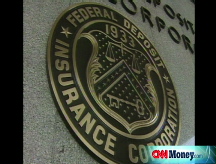
At that time, roughly 1,500 institutions were on the Federal Deposit Insurance Corporation's so-called "problem list" of banks considered at risk of failure.
That's a far cry from today's environment.
As of late May, just 90 institutions were on FDIC's troubled bank list. That number could grow when the FDIC releases its latest reading on the state of the banking industry in August. But on a historical basis it still remains relatively low.
While the global financial institutions have had to write down billions of dollars as a result of the mortgage crisis, many industry analysts anticipate the failures going forward to crop up at the community banking level or among the mortgage-centric thrift banks.
A rash of failures at the community level could have far-reaching effects. Smaller banks are big players in the business of construction loans made to homebuilders. More failures could tighten lending standards further, squeezing certain pockets of the housing market even more than they already have been.
But the FDIC continues to stress that accounts up to $100,000 at a failed bank are insured. For this reason, FDIC chairman Sheila Bair said in a statement Sunday that "for insured depositors, IndyMac's conversion has been largely a non-event."
Still, IndyMac marked the largest collapse of an FDIC-insured institution since 1984, when Continental Illinois, which had $40 billion in assets, failed.
That prompted speculation Monday that other big firms facing massive loan troubles could suffer a similar fate.
Washington Mutual (WM, Fortune 500) shares tumbled more than 30% Monday after a Lehman Brothers analyst suggested the Seattle-based thrift may need to raise its reserves significantly to cover its home loan losses. Ladenburg Thalmann's Bove warned that WaMu is on the edge of the "danger zone."
After the market closed Monday, WaMu said in a statement that the bank "significantly exceeds all regulatory 'well-capitalized' minimums for depository institutions."
National City (NCC, Fortune 500) shares plunged on market speculation that the company was close to failure. The bank issued a statement Monday saying it was well capitalized and was not suffering a liquidity crisis.
But Bair told members of Congress last month that her office was preparing for the possibility of a large bank failure but added that she did not anticipate such a scenario.
What may also stem the tide of bank failures this year is that some institutions could get bought before reaching the brink of collapse.
At the same time, private-equity firms and sovereign wealth funds have proved willing to provide funding to capital-hungry banks. Earlier this year, both National City and WaMu raised cash by selling outside stakes to top private-equity firms.
During the S&L crisis, that option wasn't always available, notes T. Timothy Ryan Jr., a former director of the Office of Thrift Supervision. Ryan helped guide the S&L cleanup and currently serves as the president and CEO of the Securities Industry and Financial Markets Association.
"We had no capacity to raise private equity for institutions that were undercapitalized," said Ryan. "That is wholly different today." 



