
Closer to a deal
Congressional leaders say they have made progress. Paulson agrees to pay limits.




NEW YORK (CNNMoney.com) -- The debate over a proposed $700 billion government bailout of the nation's financial system raced forward on Wednesday as the Bush administration and congressional Democrats moved closer to a deal.
With lawmakers demanding that the president explain to Americans why the bailout is necessary, President Bush plans to address the nation in a prime-time speech.
In a show of unity, House Speaker Nancy Pelosi, D-Calif., and Minority Leader, John Boehner, R.-Ohio, said Tuesday evening that they are working closely with the administration and "have made progress" on hammering out a deal.
"We agree that key changes should be made to the administration's initial proposal," they said in joint statement. "It must include basic good-government principles, including rigorous and independent oversight, strong executive compensation standards, and protection for taxpayers."
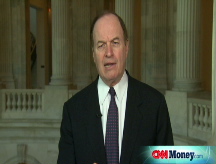
Meanwhile, Sen. Christopher Dodd, D-Conn., said that the Senate is getting closer, but will not rush through a plan that "will have implications for decades to come."
"We're not there yet, but we're getting there," he said, adding the plan requires smart, thoughtful discussion and must include help for homeowners.
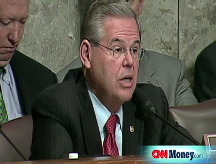
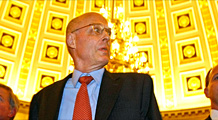
Earlier in the day, the House Financial Services Committee, led by Rep. Barney Frank, D-Mass., grilled Treasury Secretary Henry Paulson and Federal Reserve Chairman Ben Bernanke over the details of the controversial proposal.
At the hearing, Paulson agreed that the bill should curb executive compensation at the firms that sign up for the rescue plan, one of the Democrats' key demands.
"The American people are angry about executive compensation and rightfully so," he said. "Many of you cite this as a serious problem and I agree. We must find a way to address this in the legislation but without undermining the effectiveness of this program."
The Treasury secretary, however, said he would oppose allowing bankruptcy judges to change mortgage terms because it's "inconsistent with what we're trying to do, which is increase the flow of funds."
The Treasury's plan, the most sweeping federal intervention in the financial markets since the Great Depression, calls for the government to buy from firms up to $700 billion in troubled assets - mainly mortgage-backed securities - whose values have declined as the housing market imploded. The goal is to stabilize the companies and prompt them to lend again.
Paulson and Bernanke have been touring Congress this week, hoping to convince lawmakers to pass the bill quickly without adding too many provisions.
The Treasury Secretary acknowledged lawmakers' concerns about protecting the taxpayers.
"I understand the view that I have heard from many of you on both sides of the aisle, urging that the taxpayer should share in the benefits of this plan to our financial system," Paulson said.
"Let me make clear - this entire proposal is about benefiting the American people, because today's fragile financial system puts their economic well-being at risk," he continued. "When local banks and thrifts aren't able to function as they should, Americans' personal savings, and the ability of consumers and businesses to finance spending, investment and job creation are threatened."
Almost immediately after the Bush administration unveiled its $700 billion bailout of the financial sector on Saturday, Congress started making demands. Lawmakers have a long list, which includes more oversight over the Treasury program and a potential equity stake in the companies that sell their troubled mortgage assets.
Others feel that Congress should dramatically revamp the plan to protect taxpayers and prevent a fundamental change to the American financial system.
Rep. Paul Kanjorski, D-Pa., said the administration had to make a better economic case for the bailout so Americans can understand why it's so desperately needed.
"If our markets and capitalism itself are truly on the line, then the president must speak openly, frankly and publicly about these problems," Kanjorski said. "Once the administration establishes the predicate for emergency action, only then should the Congress consider passing this package of truly massive proportions."
Several lawmakers said American taxpayers shouldn't bail out companies that took enormous risks. Also, they questioned the idea of setting a purchase price based on the "hold to maturity" value of an asset instead of on its current market value.
Why should taxpayers have to pay a price based on what something might be worth in the future, Rep. Luis Gutierrez, D-Ill., asked in an animated exchange with Paulson.
The fate of the high-stakes legislation was very much up in the air on Wednesday. President Bush will address the nation at 9 p.m. ET about the need for lawmakers to pass a bailout package quickly.
A senior administration official said Bush has been contemplating a prime-time speech for several weeks but finally decided to deliver it tonight because the situation has reached crisis stage and he believes it's crucial to get Congress to support the $700 billion bailout package.
"This is a bullet you only fire once," said the senior official. "We have reached a point in the process where we just have to get action."
The urgent atmosphere over the proposal spilled over into the presidential campaign on Wednesday when Republican candidate Sen. John McCain said he was suspending his campaign and wants a delay in the first debate, which is scheduled for Friday night.
At the hearing, Paulson said the ultimate cost of the program would depend how fast the housing market recovers. And reiterating a point he and Bernanke have made repeatedly in the past few days, he added that "the loss to the taxpayers should be much less than the purchase price of the assets."
Paulson and Bernanke faced strong criticism Tuesday from both Democrats and Republicans on the Senate Banking Committee. The pair spent almost as much time conceding problems with the plan as they did championing it as the solution to the nation's current financial problems.
Earlier Wednesday, Bernanke warned the financial crisis could drag the U.S. economy into a deeper downturn and urged Congress to take action on a proposed bailout package.
"The intensification of financial stress in recent weeks, which will make lenders still more cautious about extending credit to households and business, could prove a significant further drag on growth," he told the Joint Economic Committee. "The downside risks to the outlook thus remain a significant concern."
- CNN congressional producer Deirdre Walsh and CNN White House correspondent Ed Henry contributed to this report. 



