
Emergency rate cut: 'This better work'
Will the rate cuts by global central banks eventually calm the markets down?



 |
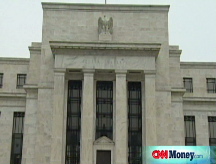
| The Federal Reserve has cut interest rates eight times since September 2007. |
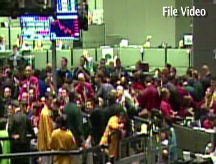
NEW YORK (CNNMoney.com) -- Investors around the world have been crying loudly for the past few days. On Wednesday morning, global central banks finally gave in.
But will the coordinated interest rate cuts by global central banks finally calm the markets down?
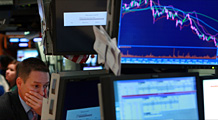
It was clear that central banks had to do something. The Dow has plunged more than 1,400 points in just the past five days and is nearly 2,000 points lower than where it was before the record one-day point drop on Sept. 29. That's a 17.6% drop.
However, it appears investors weren't sure what to think about the rate cuts just yet.
European stock markets, which had been plunging before the rate cut, initially bounced back but then resumed their slide. The Dow, Nasdaq and S&P 500 opened sharply lower at the opening bell, moved dramatically higher and then turned lower again. That was all in the first two hours of trading.
One market strategist said the selloff is a bad sign because the Fed and other central banks are running out of ways to effectively deal with the credit crisis.
"This better work. This is the last chance," said Jeffrey Saut, chief market strategist with Raymond James Financial.
What gives? Well, the rate cuts may be what many investors were waiting for, but that doesn't mean they will work immediately.
There will probably be more bad economic reports and corporate news in the coming days and weeks.
Federal Reserve chairman Ben Bernanke issued an extremely dour economic outlook in a speech yesterday.
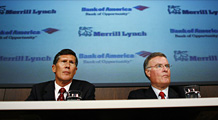
Bank of America (BAC, Fortune 500) reported a 68% drop in quarterly profits Monday and cut its dividend, news that confirmed to many that the banking crisis is far from over.
And several retailers on Wednesday posted dismal sales results, including Target (TGT, Fortune 500), J.C. Penney (JCP, Fortune 500) and Saks (SKS).
So expect more volatility.
"At the end of the day, what's going on right now is pure fear," said Ted Parrish, co-manager of the Henssler Equity fund.
Investors seem to want solutions that show instant results. Just add water and watch the credit markets heal. But guess what? That's not how things work. You can't turn around the global economy on a dime.
"The market expected a quick fix when Congress passed the bailout plan but the Treasury hasn't even started to implement it yet. It will take time to get the credit markets back on track," said Parrish. "There is some impatience here."
Even one of the Fed's own policy makers tackled this issue in a speech Wednesday morning.
Charles Plosser, president of the Federal Reserve Bank of Philadelphia, stressed that many of the Fed's recent actions are meant to bolster the health of the economy for the long-term. But the Fed cannot simply wave a magic wand and cure the economy in a nanosecond.
Plosser said that people fail "to recognize the difference between what the Fed can do in the long run and what it might be able to do in the short run."
"Just as we should avoid setting unrealistic expectations for monetary policy, we should also avoid encouraging unrealistic expectations about what the Fed can do to combat financial instability," he said.
Another market strategist said that since interest rates were already relatively low - the Fed cut its overnight bank lending rate from 2% to 1.5% - the effect on the markets and economy from this rate cut may be only psychological.
"The rate cut is more symbolic than anything else," said Saut. "I applaud Bernanke for being very creative and innovative. But the Fed could have done this sooner. They have been reactive instead of thoughtfully proactive."
Still, another market strategist said the rate cuts were a good sign, especially since the European Central Bank, which raised rates as recently as July, finally acknowledged the risks of a slowdown.
"The fact that the ECB was on board with the rate cuts is a big deal. They kind have been like an ostrich with their head in the sand," said John Derrick, director of research with U.S. Global Investors Inc, a money management firm based in San Antonio.
Parrish is optimistic about the many steps the Fed has taken in addition to the rate cut - such as yesterday's decision to start buying short-term business loans as well as a series of capital injections to troubled banks. "There has been a lot of stimulus by the Fed. Once sellers clear out of the way, it will be very dangerous to short this market," he said.
But Derrick said that if the markets don't respond well to the rate cuts, it may prove that the only solution for the crisis is the elapsing of time...a truly scary thought.
"There is fear of the unknown. Earnings are not going to be good. It's hard to see another positive catalyst in the short-term," he said. 



