
Foreclosures soar 76% to record 1.35 million
Foreclosure rate hits nearly 3% in the third quarter, while another 7% of borrowers fell behind on their mortgages.





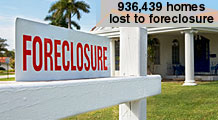
NEW YORK (CNNMoney.com) -- A record 1.35 million homes were in foreclosure in the third quarter, driving the foreclosure rate up to 2.97%, the Mortgage Bankers Association said Friday.
That's a 76% increase from a year ago, according to the group's National Delinquency Survey.
At the same time, the number of homeowners falling behind on their mortgages rose to a record 6.99%, up from 5.59% a year ago, the association said.
This means that one in 10 borrowers in America are either delinquent or in foreclosure.
Many of those troubled borrowers are in California and Florida, which have among the highest delinquency rates in the nation.
The weakened economy and mounting job losses are expected to push these numbers even higher. And that will likely affect homeowners with prime, fixed-rate mortgages, which make up the vast majority of loans and have so far held up fairly well. Until now, much of the housing market's problems were concentrated in the subprime, adjustable-rate market, where homeowners with weak financial backgrounds got loans they ultimately couldn't afford.
"We have not gone into past recessions with the housing market as weak as it is now, so it is likely that a much higher percentage of delinquencies caused by job losses will go to foreclosure than we have seen in the past," said Jay Brinkmann, MBA's chief economist.
Unemployment soared to 6.7% as payrolls shrunk 533,000 in November, the Bureau of Labor Statistics said Friday. It was the largest monthly job loss in 34 years, and brought the year's total job losses to 1.9 million.
The number of homes going into foreclosure in 2008 is on track to hit 2.2 million, Brinkmann said.
The percentage of homes starting the foreclosure process in the third quarter actually inched down to 1.07% from 1.08% a year ago. But that's due at least in part to the fact that some states have instituted foreclosure moratoriums in order to give troubled borrowers a chance to get their loans modified.
But the moratoriums may just delay the inevitable for many, and could push up the foreclosure rate even more in coming quarters. For instance, Massachusetts, which instituted such a moratorium earlier this year, saw a large drop in foreclosures during its moratorium and then a big increase the following quarter, Brinkmann said.
Asked how recent government and servicer efforts to modify loans would affect the foreclosure rate in coming quarters, Brinkmann said it depends on how many of those borrowers are interested in workouts. Some reports say that 40% of homes with delinquent mortgages are already vacant.
At the same time, the foreclosure moratoriums and foreclosure prevention efforts have pushed up the number of loans that are 90 days or more late to its highest level ever. But this might not be as dire as it sounds, Brinkmann said. Many of the one million homeowners who fall into this category may never go into foreclosure if a more affordable mortgage can be arranged.
Another hint of good news in Friday's report is that the number of borrowers one month behind in payments remained fairly steady at 3.39%. This remains below levels seen during the last recession in 2001, Brinkmann said.
As for 2009, it all depends on whether the economy recovers, he said.
"Absent a recession, the 2009 number would likely have fallen by several hundred thousand, but the effects of job losses and general economic deterioration make the 2009 outlook worse, particularly if mortgage problems become more widespread," Brinkmann said.
The report is based on 45.5 million mortgages, about 85% of the total number of first mortgages nationwide.
California and Florida continue to have the country's highest rates of new foreclosures. These states have about 93,000 and 90,300 of the foreclosure starts in the quarter, respectively, according to the group. The next state, Illinois, is far behind with about 27,500 starts.
California and Florida also lead the nation in job losses, with the Golden State losing 101,300 positions over the past year and the Sunshine State shedding 156,200 jobs.
"Until those two markets turn around, they will continue to drive the national numbers," Brinkmann said.
Seven other states had rates of foreclosure starts that were above the national average for the quarter: Nevada, Arizona, Michigan, Rhode Island, Illinois, Indiana, and Ohio. But 20 states saw a decline in their foreclosure start rate, due to the moratoriums and modification efforts.
One in five subprime loans are now delinquent, crossing the 20% threshold for the first time, the group said. That level was up 3.72 percentage points from a year ago.
The number of prime loans past due also increased to 4.34%, up 1.22% from a year ago.
A growing number of prime borrowers are expected to fall behind on their mortgages as they lose their jobs. Until the economy turns around, the housing market will continue to suffer.
"It's clear the mortgage market is being driven by fundamental issues with jobs and the economy," Brinkmann said. 



