How to control negative emotions
In tough times, keeping your cool is essential.



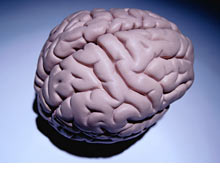
(Fortune Small Business) -- During an economic storm, everything solid melts into air. When it's not clear if there's a tomorrow to work toward, how do you keep morale up and communication channels open? To help you stay afloat, here's my brief field guide to anger, fear and ambivalence, three negative emotions that many business owners wrestle with today.
Anger - Mark B., founder and president of a textile manufacturing company, is upset about the state of the world in general and of his industry in particular. "I feel angry nearly all the time," he told me. "I'm lashing out at my employees, vendors and clients."
Fear - John M. runs a successful mid-size telecommunications company that he inherited from his father 14 years ago. With the headlines full of bleak economic news, John fears imminent failure. He's melancholic and pessimistic, feeling like "an all-around wet blanket." "I'm convinced my talented team and loyal customers will head for the hills any day now," he says.
Ambivalence - Mike F. is a partner in a boutique financial services firm. He sees his managing partner, Don, as passive, indecisive and nonconfrontational. Forever compensating for Don's shortcomings without acknowledgment or reward, Mike is torn between loyalty to his firm, clients and staff on the one hand and his desire to migrate to a more positive work environment on the other.
How to calm Mark's anger so that he can stay focused on his business, even when he doesn't know how it might evolve? Can John turn his pessimism into something more constructive? Is Mike an unsung hero or a naive patsy? After he figures out the answer, what are his options?
Sigmund Freud famously said that in case of fire, the first task of firefighters is to extinguish the flames before seeking the cause. His advice holds today: Help individuals (and businesses) cope with their immediate problems, but keep an eye on root motivations and recurrent patterns.
Contrary to popular stereotypes of psychoanalysis, this doesn't mean that Mark, John and Mike must put their family histories on the couch. It's more about helping each of them calm down, move forward and feel stronger by recognizing old behavioral templates, revising the outmoded responses they generate and creating solutions that are appropriate to the present day.
When Mark and I met one afternoon, he seemed ready to bite somebody's head off. "You're angry," I observed. He hadn't noticed - sometimes people have no idea what they're feeling. When I asked what was going on in his life, Mark started fuming about the incompetence of his staff.
"What did they do wrong?" I asked. The infractions were minor, and in enumerating them aloud Mark saw how disproportionate his fury was to its catalyst. In addition, just telling me brought his temperature down a few degrees. Now he's learning to articulate what's bothering him in the moment. A little steam now is better than lava later.
By contrast, John suffers from feelings of dread that predate the recession by many years. The story is simple and painful. John's mom didn't punish; his dad did. "She made me wait for him," John recalled. "He wouldn't say a word - he just hit. It seemed like forever while he took off his belt, lifted it up and let loose. I'm always waiting to be hit."
Fears like that don't vanish overnight, but you have to start somewhere. "Can you see the downturn as just that, and not as a belt?" I asked. He's working on it. Meanwhile, John holds an ace in the hole that many of his type A competitors lack. All that childhood waiting made him a very patient man, and you need patience to survive crises, economic or otherwise.
As for Mike, he looks better than he feels. Outside: big job, big salary. Inside: He feels muzzled and on a short leash. "Why can't I tell Don to take care of all this admin sh-t himself?" he complained. "I'm not his chore boy. I'm a partner with high-value clients. Why does he make me do it? Why don't I leave?"
"What would happen if you said something to Don?" I asked. "He'd be upset and then ignore me," Mike replied. That may be true, but it's probably not the real impediment. At bottom, Mike hates to upset people. Understanding this is the first step to building a healthier relationship with his partner. Eventually, Mike will figure out that he's neither hero nor patsy, but simply himself. That's a worthy goal for all of us.
Alexander Stein, Ph.D., is a practicing psychoanalyst in New York City and a principal in the Boswell Group, a consulting firm. 

-
 The Cheesecake Factory created smaller portions to survive the downturn. Play
 -
 A breeder of award-winning marijuana seeds is following the money and heading to the U.S. More
 -
 Most small businesses die within five years, but Amish businesses have a survival rate north of 90%. More
 -
 The 10 most popular franchise brands over the past decade -- and their failure rates. More
 -
 These firms are the last left in America making iconic products now in their twilight. More