
The incredible shrinking dollar
The greenback has weakened as stocks have rallied on economic recovery hopes. But there are pros and cons to the dollar's decline.




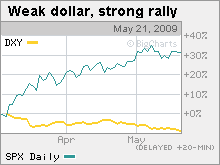 |
| While the S&P 500 (SPX) has surged on recovery hopes, an index tracking the value of the dollar against a basket of other currencies (DXY) has dropped. |
 |
| The dollar is weakening. The good news is that this could boost profits for major U.S. companies The bad news is that it may make oil and other commodities more expensive. |
NEW YORK (CNNMoney.com) -- The U.S. dollar has taken a beating in the past few months even as stocks have soared and investors have come to expect an economic recovery sooner rather than later.
The euro hit a 5-month high against the greenback on Wednesday while the British pound rallied to its highest level against the dollar since November. The dollar has also been weakening against the yen as of late.
It's an interesting phenomenon that, at first blush, might not make sense. The stronger the rally in stocks and the more that people talk about a potential end to the recession, the more ground the dollar...loses against other currencies?
But this does make sense. Despite the many problems facing the U.S. economy, traders had flocked to the dollar because of its relative safety. As bad as the U.S. economy was, it appeared that Europe's was in even worse shape.
Plus, there's the notion that since the U.S. led the rest of the world into this global economic crisis, it was likely that it would also be the first country to emerge from the recession.
Now that there are more signs that this is coming to fruition, investors have embraced stocks again. The dollar is no longer viewed as a place for jittery investors to park cash.
"The dollar is under pressure. As the economic situation in the U.S. seems to be stabilizing, the dollar is losing some of its safe haven demand. It's on weak footing," said Brian Dolan, chief currency strategist for FOREX.com, online currency trading site.
Talkback: Are you worried the dollar will get even weaker? Leave your comments at the bottom of this story.
So if the dollar deteriorates further, how will that impact the economy going forward?
The bad news is that a weaker dollar could lead to a continued surge in commodity prices, most notably oil. The weakening greenback has played a small role in leading crude prices back above $60 since oil is traded in dollars.
If oil prices stabilize around this level, it may not necessarily spell an end to economic recovery hopes. But if the dollar dips even more and oil prices skyrocket as a result, that has the potential to hit consumers hard. Nobody wants a return to last summer's record high gas prices of more than $4 a gallon.
"If the dollar were to continue to weaken and energy prices move much higher, it acts like a tax on the consumer," said John Derrick Director of research U.S. Global Investors Inc., money management firm based in San Antonio.
A much weaker dollar would also make the cost of other imported goods more expensive and diminish the buying power of anything purchased abroad. That's also not in the best interest of consumers.
But a shrinking dollar is not all bad news. Many big multinational companies based in the U.S. could benefit from further declines in the greenback since it would boost the value of their international sales and profits once translated back to dollars.
While that may seem like nothing more than a mere accounting trick, the importance of improving results for blue chip companies can't be overlooked.
With that in mind, an analyst at Deutsche Bank upgraded shares of McDonald's (MCD, Fortune 500) on Wednesday and cited easing currency pressures, i.e. a weaker dollar, as one of the reasons he's more optimistic about Mickey D's outlook.
Other big multinationals such as Procter & Gamble (PG, Fortune 500), Johnson & Johnson (JNJ, Fortune 500)and Coca-Cola (KO, Fortune 500) have been moving higher as the dollar has weakened and have also been upgraded by analysts.
Let's face it: We need American icons like these companies to bounce back. The only way for the market rally to have legs is for large, well-known firms to get back on solid footing.
Even though it's tempting to say that what happens on Wall Street doesn't affect you on Main Street, nothing could be further from the truth.
An improving stock market should eventually lead to higher levels of consumer confidence and, more importantly consumer spending. What's more, it's no coincidence that major companies issued massive layoffs falling steep plunges in profits and their stock prices. The job losses should abate and companies will start hiring again once their bottom lines improve.
Now of course, a weaker dollar is not a complete panacea for the U.S. economy's woes. Dolan points out that multinationals will probably report some favorable impact from currency fluctuations in the second quarter, but that will be partly offset by the fact that demand abroad is likely to remain weak due to the worldwide economic slump.
Derrick adds that some investors are likely to dismiss any profit gains from a falling dollar as transitory.
Still, there are clearly pros and cons to a weaker dollar. Everybody is hopeful that the U.S. economy is finally close to hitting bottom, and one sign that the recovery could be for real is if investors continue to sell the dollar and embrace riskier assets.
But one unfortunate side effect of a recovery is that the dollar could get dragged down further and spark more worries about inflation down the road.
Talkback update: Greetings Buzz readers. There is a new way to post comments for this column. If you have a Facebook account, you can submit your feedback using the Facebook Connect feature that will appear at the bottom of the page. If you don't have one, it is free to sign up.
The good news is that reader comments will now appear immediately and on the same page as the column as opposed to a separate page. I trust that loyal Buzz readers will continue to actively share their thoughts with this new feature. And rest assured, I will still be using the best reader reaction as fodder for video installments of The Buzz.
So with that in mind, here is today's question for readers. Are you worried the dollar will get even weaker? 



