Fed not acting like there's a recovery
The economy is showing signs that it is emerging out of a deep recession, but don't expect the Fed to change course quite yet.



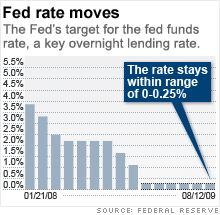
NEW YORK (CNNMoney.com) -- Federal Reserve Chairman Ben Bernanke has said that the recession is "very likely over," but the Fed isn't acting like we're in a recovery.
Economists widely believe the central bank will keep interest rates between 0% and 0.25% at the conclusion of its two-day meeting Wednesday. The Fed is also expected to say very little about its plans to wind down more than a trillion dollars in lending and bailout programs, and it will likely stay away from any overly enthusiastic language about the economic outlook.
"This will be one the quietest Fed meetings in quite some time," said Rich Yamarone, director of economic research at Argus Research. "The last thing they want to do at this stage of the game is to upset the apple cart. They're liking what they're seeing in some of the economic data, so it's just steady as she goes."
The Fed uses its rate-setting tool in an attempt to balance unemployment and inflation, typically lowering rates during a recession to boost economic activity and raising rates coming out of a downturn to stave off rampant inflation.
But experts argue that the recovery from this recession is so tenuous that the Fed is right to keep its finger off the rate-hike button for now.
"The Fed normally anticipates the recovery by raising rates, taking away the punch bowl just as the party gets interesting," said Peter Morici, professor of economics at the University of Maryland. "But this is not a normal recovery. It's tepid and weak."
Unemployment is still rising, retail sales are far from robust, manufacturers' capacity utilization remains at ultra-low levels and wages are still depressed. Home sales and new home construction are making a comeback, but they're coming off of historic lows.
Inflation not an issue for now: As a result of the still shaky economy and low consumer confidence, concerns about inflation have been mostly muted.
"If people aren't spending the money, you can't have inflation," said Morici. "If Bernanke puts a pile of money out on the street, it doesn't count if it doesn't chase goods."
Still, the Fed continues to oversee dozens of expensive and unprecedented economic rescue programs. They have largely been credited with staving off an even deeper and more prolonged recession, but they could contribute to out-of-control inflation if they are not pared back in time.
"Bernanke is a student of history, and he knows that the real problems during the Depression occurred when the government pulled back its stimulus too quickly," said Doug Roberts, chief investment strategist at ChannelCapitalResearch.com. "Also, the Fed chief is up for reappointment, and he won't help his case if unemployment hits 12, 13 or 14%."
"But at the same time, he should start to gently pull back some of the programs to ease inflation concerns," Roberts added.
No rate changes until next year: Roberts said a gradual winding down of those programs will reduce the risk of inflation without slamming the brakes on the recovery.
Most economists think the Fed is keeping a close eye on any signs of stabilization in the labor, banking and housing sectors. When those become more obvious, the Fed will need to aggressively raise rates and end those emergency lending initiatives.
But a majority of forecasts don't show stabilization until the end of the year or beginning of 2010. Until then, the Fed is likely to keep rates unchanged so it doesn't disrupt what appear to be the underpinnings of an economic rebound.
"The idea is to not tighten up too soon," said Morici. "If the economy turns down again, we could fall off the cliff."