|
Trade gap narrows
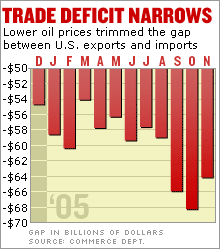
Lower oil prices trims deficit more than forecast in November from record levels.
NEW YORK (CNNMoney.com) - Lower oil prices cut the U.S. trade deficit in November from the previous month's record level, according to a government report Thursday that showed a narrower gap between imports and exports than Wall Street estimated. The Commerce Department reported that the November trade gap was $64.2 billion, compared with the revised $68.1 billion in October. Economists surveyed by Briefing.com had forecast the deficit would narrow to $66 billion in November.
The average price of for crude oil imports fell 7.3 percent in the month to $52.16, and decreases in the price of other energy products reduced total petroleum-based energy imports by a seasonally adjusted $774 million. That was a key behind the nearly $2 billion, or one percent, drop in overall imports. The trade gap was also helped by a $1.9 billion, or nearly two percent, increase in exports, which took exports to a record $109.3 billion. A $694 million increase in civilian aircraft exports was a key to that record. Still, even the lower-than-expected deficit in November was the third highest recorded, and would have been a record as recently as August. Jay Bryson, international economist for Wachovia Corp., said that it's too soon to say that the trade gap peaked in October, especially since oil prices have again risen since the November period -- even if they haven't reached as high as the post-Katrina spike that caused the October record trade gap. Oil surge or not, the nation's imports have such a large lead over exports that reversing the trend of larger trade gaps will be difficult, he said. "Imports are growing about 13 percent, year over year, while exports are growing at about a 9 percent pace," Bryson said. "Just to stabilize the deficits, exports have to grow at almost twice the pace of exports. You'd have to have imports almost collapse for that to happen, and that's not likely. I think we'll definitely see some bigger numbers as we go forward."
For more on what the economy means to you and the markets, click here. |
|