|
Trade gap sets record
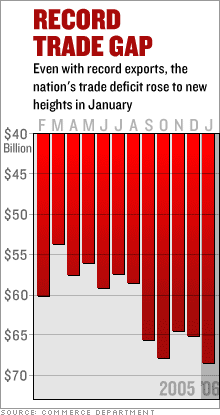
Imports outstripped exports by $68.5 billion in January, topping forecasts of economists.
NEW YORK (CNNMoney.com) - The U.S. trade deficit reached a record level in January, according to a government report Thursday that showed U.S. consumers' appetite for overseas goods continuing to grow. The Commerce Department reported that the value of imports exceeded exports by $68.5 billion, up from a revised $65.1 billion in December, and topping the previous high of $67.8 billion set in October. Economists surveyed by Briefing.com had forecast the gap would rise to $66.5 billion in January.
The five largest monthly trade gaps in history have now occurred in the last five months, and the trade gap is only likely to continue to be near or above this current record in the coming months. January's record monthly trade deficit is almost as large as the nation's full-year trade gap of $70.3 billion posted as recently as 1993. Imports now outstrip exports by so much that exports would have to grow at a pace a bit more than half again as fast as the rate of import growth just for the trade gap to stay unchanged. With the current strength in the U.S. economy and consumer spending, that's not likely to happen until late spring or the second half of the year, said Gina Martin, economist with Wachovia. "We're consistently breaking records with this report, and just about every month is bigger than expected, so I don't think there's any great change to the story," said Martin. U.S. exports also set a record in the month, rising to $114.4 billion from the previous record level of $111.6 billion set in December. But imports rose even faster, climbing to $182.9 billion from $176.6 billion the previous month. China adds more to gap than oil
Higher oil prices helped increase the size of the deficit, but it wasn't the overwhelming factor in the record gap. The average price of $51.93 for a barrel of imported petroleum was up 4.4 percent from December, but still down nearly 8 percent from the record seen in October. With the rise in the price of oil, the gap attributed to petroleum products was $22.6 billion, up from $21.8 billion in December. The jump in the trade gap of non-petroleum goods rose much more, to $49.6 billion from $46.8 billion. The imports of autos and auto parts rose $1.2 billion in the month, while the purchase of consumer goods from overseas added another $1 billion to the trade gap. Martin said one thing that could help narrow the monthly deficit would be a weaker dollar compared to currencies such as the euro and the yen. A weaker dollar makes U.S. exports more competitive, at the same time it raises the price of imports, crimping demand. But the United States continues to have its largest trade gap with China; the trade deficit with that country rose by $1.6 billion to $17.9 billion. The value of the Chinese yuan is still relatively fixed to the dollar, despite moves by China to have some minor adjustments in the exchange rate. University of Maryland economics professor Peter Morici said a significant rise in the value of the yuan is a key to reining in the trade gap. "This situation is likely to become worse in the months ahead," he wrote in a note Thursday. "The dollar remains at least 40 percent overvalued against the Chinese yuan, and similarly overvalued against other Asia currencies. The overvalued dollar will contribute mightily to the U.S. trade deficit until the Bush Administration takes decisive action." Morici said the growing trade gap continues to limit U.S. economic growth. "Cutting the trade deficit in half would boost employment and productivity enough to raise GDP by $300 billion or about $2,000 for every working American," he wrote. "Workers' wages would not be lagging inflation, and ordinary working Americans would more easily find jobs paying good wages and offering decent benefits."
For more on the economy and what it means to you and the markets, click here. |
|