|
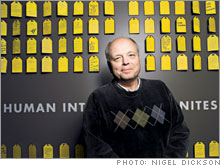
Best Buy's transformative CEO
CEO Brad Anderson took Best Buy from a struggling regional stereo shop to being the nation's biggest consumer electronics superstore. What's next?
 NEW YORK (FORTUNE) - In a career that spans four decades, CEO Brad Anderson has transformed Best Buy (Research) from a struggling regional stereo shop into the nation's biggest and best consumer electronics superstore, with $30 billion in sales across 930 locations in the US and Canada. But with new competitors like Wal-Mart (Research) and Dell (Research) gaining market share, he's decided to overhaul the company's retail philosophy to focus on customers, not gadgets, a process called customer-centricity.
He talked to FORTUNE's Matthew Boyle about how to maintain growth, overcome setbacks, and what the CIA can teach CEOs. Between customer-centricity, the Geek Squad service business, expansion into China, and other initiatives, you're keeping plenty busy. Why are you doing so much at once? We have a history as a growth company. But the bigger you get, the harder it is to maintain that status. In the 1990s our target was to open 1,000 stores and we're at 930 now. We met our objective so we had to recreate our strategy in order to maintain that level of growth. We had tried a strategy of acquisitions but it hadn't been very successful. So we had to find growth engines that hadn't been identified and to do that, we had to get as many ideas into the water as possible. And then find out which ones work. What happens when ideas you've supported don't work? I think the biggest challenge in leadership, and this has happened to me repeatedly, is when you have your stamp on a plan and it does not work. An example was when we changed from a commission-based sales force to a salaried sales force back in 1989. Today it's normal but back then it violated all the conventional wisdom. When we did it, the first stores did not work financially. We had bet the company that this strategy would be better and it almost didn't work. That's when I needed to listen. We eventually uncovered what was wrong. As a specialty store, we were dependent on advertising but we had set the store up to function with lower prices and no advertising. So we changed that. After a tough third quarter last fall, when sales were below expectations, did you ever doubt that centricity would work? To be honest, if you meet the needs of the customer you will have a better business. I don't think that's a particularly brilliant hypothesis, but I'm stubborn about that as an unchallengeable premise. Now whether we're doing it in the right way is a highly challengeable premise. Where do you get your ideas? I'm easily inspired. I'm an obsessive reader and I love biographies because I'm interested in what motivates human beings. I just read one on Albert Einstein and I'm reading one called "Jawbreaker," by Gary Berntsen, who was in the CIA. It's an interesting account of how bureaucracies function when challenged by new events. That's something I find endlessly fascinating. You're opening a store in China this year. What's your impression of the country? I've only been out there once and we're going again in April for a week, with our entire board of directors. You can't imagine China without seeing it. Almost any place in Asia looks interesting to us. I think countries like Turkey are interesting too. Any advice for new CEOs? In the six months before I became CEO in June 2002, I took a lot of time trying to learn as much as I could about the range of thinking outside of our business. I wanted to know if I could turn my hypotheses into real value.
For example, I went to a week-long executive development program at the Swiss business school IMD. These trips got somewhat controversial inside the company, because it was an unconventional way to use time. So I don't do as much of that now. |
|