|
Penny's new shine good for everyone?
U.S. Mint shelling out more money to produce pennies than they are actually worth due to rising copper, zinc prices, paper reports.
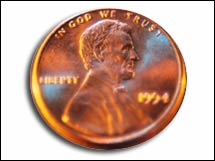
NEW YORK (CNNMoney.com) - The penny is now shining brighter than ever as recent increases in the cost of copper and zinc continue to push up its actual value, but that's not necessarily good news for the United States Mint, according to a report published Monday. With the value of copper at $3.07 per pound and the price of zinc three times what they were in 2003 at $3,200 a ton, the government is spending more money to produce the copper coin adorned with Abraham Lincoln's image than it is actually worth, the New York Times reported.
Right now, the market value of the zinc and copper within a single penny is valued at nearly 0.9 cents. And since it costs an additional 0.6 cents to manufacture a penny, according to the paper, the Mint is paying roughly 1.5 cents for every penny it makes. In an environment of rising zinc and copper prices, the Mint did not give the paper any indication it would reconsider the makeup of the penny, which is primarily made of zinc with just 2.5 percent worth of copper. The United States government has used other metals to mint pennies in the past, as it did in World War II when they government ordered a switch from copper to steel to help with the war effort, but any changes would first need approval by Congress, according to the Times. In 1982, when the price of copper reached record levels, the Mint opted to change the penny to the current zinc-copper composition, according to the paper. ______________
Monopoly rolls the dice on changing its look -- click here. |
|