|
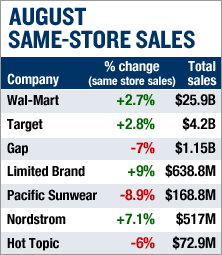
Retailers: Back-to-school sales mediocre Gap sales tumble 7 percent; teen apparel sellers a mixed bag; Wal-Mart results in line, but Penney loses some of its shine. NEW YORK (CNNMoney.com) -- Retailers turned in a mixed bag for August as many U.S. chain store operators failed to get a hoped-for back-to-school sales boost. Among the laggards Thursday were Gap, Inc. (Charts) The No. 1 apparel seller posted a 7 percent decline in August sales at its stores open at least a year, which is a key retail measure known as same-store sales. Analysts had expected the retailer to post a 3.4 percent decline for the month.
Sales at teen clothier Pacific Sunwear (Charts) fell 8.9 percent and tumbled 7 percent at goth- and music-themed clothing seller Hot Topic (Charts). Elsewhere, department store operator J.C. Penney (Charts) posted a 0.5 percent dip in August sales, and sales at men's specialty apparel chain Jos. A. Bank (Charts) declined 6.1 percent. Indeed, the disappointments highlight concerns that gas price inflation, a slowing housing market and rising interest rates may be forcing consumers to rein in their spending patterns. However, offsetting that negative trend were better than expected results from high-end retailer Nordstrom, trendy casual fashion sellers Abercrombie & Fitch and Bebe Stores (Charts). Sales at Nordstrom rose a strong 7.1 percent last month, while Abercrombie (Charts) posted a 6 percent increase in its same-store sales. Bebe sales surged 12.5 percent in August. Additionally, the world's largest retailer, Wal-Mart (Charts), reported sales at its stores last month rose 2.7 percent, near the high end of its previous guidance of a 1 to 3 percent increase. For September, the retailer expects comparable sales to be up between 1 to 3 percent. Wal-Mart's rival Target (Charts) posted a 2.8 percent sales increase. According to sales tracker First Call, 50 percent of the 52 retailers it tracks beat their sales estimates, and 48 percent missed. Total August comparable sales were up 3.7 percent. The firm had forecast sales to increase 3.5 percent, modestly lower than the 3.6 percent increase for the same period a year ago. Separately, Ken Perkins, retail analyst and president of sales tracker RetailMetrics, said slightly more than half of the 57 retailers he tracks on a monthly basis had so far beaten their sales estimates. "We haven't yet seen a significant implosion in sales," said Perkins."There were some disappointments; store traffic seems to be slowing down. There were additional tax holidays during the month. Those should have helped retailers but it doesn't look like it did." Bernard Sands LLC senior retail analyst Richard Hastings said retail is "showing signs of wear and tear resulting from shopper hesitation that is primarily the consequence of the dual impact of the decline of the house wealth effect and the continued impact of high gas prices." "Back-to-school should remain on track for year-over-year growth, but there are bigger concerns about the holiday season based upon the chain-store sales trends and weak personal savings data trends," he added. At the same time, he cautions against selling short the resiliency of American consumers. "It is always dangerous to bet against the consumer. As long as they have stable sources of income, consumers will make decisions about where they spend. Luckily for the economy, the irrational spending habits of the consumer will hold up under even the toughest of conditions ... and we have a long way to go before it gets that tough." |
|