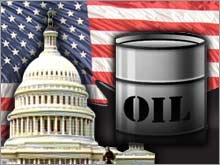
Dems versus oil, part 2Now that the Democrats have taken control of Congress, expect talk on raising earnings taxes and action on royalties.NEW YORK (CNNMoney.com) -- Democrats, now freshly in control of Congress, are likely to want to get more oil money into government coffers. The question is, how?
A windfall profits tax on the oil industry is a typical tack. And it is likely to be put forward again. But, despite the change in control, such a proposal would face a tough fight and, probably, ultimately fail. And so the attack may go a different route and target tax breaks and royalty payments. Oil companies have been making record profits off the record oil prices of late, with ExxonMobil pocketing over $10 billion last quarter alone. Much of that money has been returned to shareholders, which include large pension and mutual funds, in the form of share buybacks and dividends. Democrats have railed against what they see as earnings nothing short of unconscionable. "Oil companies are swimming in windfall profits and American consumers are sinking," Sen. Dick Durbin, D-Illinois, said last year in a statement when he introduced a bill to tax those profits. That bill died in committee. Holding a slim majority, Democrats will instead attempt to eliminate tax breaks for energy companies and raise royalty payments for oil and gas drilled on federal land, according to a spokesman for House speaker-to-be Rep. Nancy Pelosi. The measures are expected to add $33 billion to federal coffers over the next 25 years, which Democrats say they'll channel into renewable energy. Pelosi's spokesman said $20 billion is expected to come from eliminating royalty relief. Royalty relief was implemented during the Clinton administration, when oil prices were low, as a means of boosting domestic production in expensive areas to drill like the deep water in the Gulf of Mexico. Most of those leases included a provision that allowed royalties to kick in if oil prices rose into the $30s. But due to a government oversight, some leases signed in 1998 did not include this clause. Pelosi's spokesman didn't elaborate on which programs the Democrats will target, but it's generally thought that closing this oversight is the major one. Other tax breaks amounting to $4 billion granted to oil companies in 2005's National Energy Policy Act will also be on the chopping block. Still, a windfall profits tax will be a large part of the debate. "There are [now] more people [in Congress] who talked about the profits of oil companies and the high price of gasoline and made it part of their campaigns," said Nadeam Elshami, a spokesman for Sen. Durbin, "It's an issue that's certainly in the mix." Even Pelosi hasn't ruled it out. "She's open to a windfall profits tax, but not everyone in the caucus is in agreement,' said her staffer. Several countries worldwide have instituted a windfall oil profits tax recently, including England, where a tax on North Sea production was increased and can now be as high as 70 percent. Elshami said it's likely Sen. Durbin will introduce another windfall profits bill once Democrats take control, although it could be much different from 2005's bill. Durbin's previous proposal would have taxed profits of integrated oil and gas companies at a rate of 50 percent above a baseline oil price of $40 a barrel. Integrated oil companies are ones that have drilling, refining and retail operations like ExxonMobil (Charts), ConocoPhillips (Charts) and Chevron (Charts). Although that bill died in committee, a new bill with some possible modifications could stand a better chance. But not without a fight. "It's a counter-productive tax, " said Marni Funk, a Republican staffer on the Senate Energy Committee, saying her party would fight any such proposal. The previous profits tax in the 1970s "discouraged investment in the United States, and that's not what you want." And then there's the White House. Staffers and analysts point out that the president will almost certainly veto any such measure. Democrats, who control the Senate by the slimmest majority and the House only slightly more so, would need a two-thirds majority in both chambers to override a presidential veto. And market circumstances could change. "I don't think it's realistic," said Brian Perrone, an energy market analyst with South River Consulting. "The market could turn around tomorrow and there would be no more windfall profit." ______________ Energy prices: Promises, promises |
|