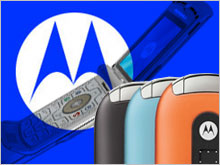
Building a cell phone for the massesHigh-end users love flashy gadgets, but most of the world just wants to make a call. That's why Motorola is reaching out to developing countries with a phone for under $50. NEW YORK (Fortune) -- While the tech world is buzzing about Nicholas Negroponte's prototype for a $100 personal computer aimed at the emerging world, cell phone makers and their suppliers have been finding ways to make ever cheaper wireless devices for the same markets. In late November Motorola (Charts) quietly launched its latest entry, the Motofone F3, in India. While Motorola doesn't set the retail prices for its devices, Motorola's Steve Lalla, vice president for mass market products, says he expects the average selling price of the Motofone to be under $50.
A low price is critical. In the U.S., phone operators heavily subsidize the cost of handsets, allowing credit-worthy consumers to acquire even high-end phones for little or no money if they commit to long-term service contracts. That practice is less common in developing countries, where customers may have little or no credit history. The Motofone isn't Motorola's first foray into low-cost devices: its has had in the market for two years a phone that typically retails for less than $40. And thanks to new, cheaper semiconductors that collapse a number of functions onto a single chip, a handful of manufacturers are set to introduce their own versions of sub-$40 handsets in the coming months. Phones for 5 billion But Motorola chief technology officer Padmasree Warrior told me that building a phone for emerging markets requires more than just cheap chips. Actually, Warrior started by admonishing me for referring to the Motofone as an "ultra low-cost handset." "We like to think of it as a mass-market device," she said. Mass market, indeed: More than 80 percent of the world's population, or close to 5 billion people, has cellular coverage of some sort. And for much of that population, the gadgets favored by cell-savvy European kids or U.S. business executives simply will not do. It isn't because the emerging world lacks the sophistication to appreciate a Motorola RAZR, or a Blackberry Pearl or whatever the phone of the moment is. (In Warrior's case, it is a limited edition Dolce & Gabbana RAZR, which she showed me at a Fortune conference in October.) Rather, Warrior notes, emerging market consumers operate under different conditions: they can't always charge their phones because power is scarce, or they may live in rural areas where dust and rough weather can damage their devices. And of course, it has to be affordable. The Motofone, she says, tries to take all that into account. Its battery can provide up to 450 minutes of talk time, and up to 400 hours of standby time. It has voice activation for dialing phone numbers and navigating through the menu screens - an important feature in communities with low literacy rates. And it can withstand dust and sun. "We started with a clean sheet of paper, and tried to innovate for the mass market," Warrior says. The device can download ringtones, but it doesn't offer Internet access or a camera or MP3 player. Fisherman's friend Like the $100 laptop, the sub-$50 cell phone has the potential to transform communities. A favorite example is that of a farmer who can call ahead to market to find out what prices his crops would fetch in advance of a long trip, ensuring he gets the best price for his wares. Similarly, fisherman can check weather conditions before heading out to sea. The innovations going into Motofone and other low-cost devices may soon influence higher end devices and smart phones. Who among us wouldn't like a phone with 400 hours of stand-by time, or a device tough enough to withstand a dust storm? Indeed, the Motofone, which weighs less than three ounces and is very slim, would be suitable for Western consumers who want a phone that boasts large fonts, easy-to-read screens and little in the way of bells and whistles. Senior citizens are one audience, but there are plenty of people who just want a cool-looking gadget for phone calls. Could a Dolce & Gabbana Motofone be far behind? ---------------------------------------------- |
|