Private equity myth: The little guy losesIt may look like top shops are making out like bandits. But the reality may be just the opposite. NEW YORK (Fortune) -- With so many billions flowing into private equity funds and so many public companies being acquired, it's really no wonder some find something unseemly or even unfair about the today's buyout boom. A case in point is the column just penned by Michael Kinsley for Time Magazine, which like Fortune is published by Time Warner. Kinsley complains about private equity firms like The Blackstone Group that will, in Kinsley's words, buy a public company for $5 billion, apply a little Wall Street "abracadabra," and then re-sell it a year or two later for $10 billion.
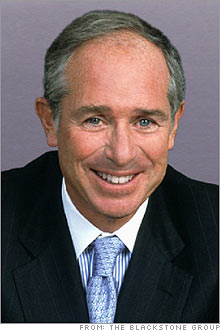
"Why," Kinsley asks, "can't the stock market deliver that $10 billion in value? Why does it take someone like [Blackstone chief Steve] Schwarzman and crew to squeeze it out (for themselves)? Some say it's the short-term perspective of the investing public. Some say it's excessive regulation, most of which doesn't apply to private-equity investments. Whatever the explanation, the billions earned by private-equity operations aren't 'created,' as the whimsical conceit of Wall Street troubadours would have it. These billions are a toll charge collected from ordinary investors." There's no question Blackstone is a money-making machine: its private equity funds have returned 23 percent a year, while its real estate funds have netted 29 percent. But what Kinsley misses is how atypical Blackstone's returns are among private equity managers. A 2005 study by University of Chicago professor Steven Kaplan and MIT Sloan School of Business professor Antoinette Schoar found that from 1980 to 2001, the average private equity fund slightly underperformed the Standard & Poor's 500 stock index. And lest you think that the biggest investors have some inside track on the best funds, consider this: The single biggest alternative investment of Calpers, the huge California public pension plan, is its $1.2 billion stake in California Emerging Ventures - from which Calpers has generated a puny 2 percent annual rate of return since 2000. Indeed, whereas Kinsley believes that private-equity firms are profiting at the expense of regular stock market investors, the opposite seems to be true. Flush with cash, private equity firms are essentially giving money away to public-market investors by paying silly premiums for already-overpriced companies like Equity Office Properties. The Sam Zell-founded REIT had its lowest-ever dividend yield and highest-ever price-to-earnings ratio just before Blackstone announced its acquisition of Equity Office in November. Blackstone wound up paying over $55 a share for EOP, a 25 percent premium. If that's getting taken advantage of, I'm sure there are plenty of mom-and-pop investors who'd like to get exploited a little more often. ___________________ |
Sponsors
|