
China poised for global shopping spreeAnalysts split over what impact Beijing's $300 billion investment arm could have on world markets.NEW YORK (CNNMoney.com) -- The Chinese government's investment agency, being formed to invest a portion of China's staggering $1.07 trillion in foreign exchange reserves, will reportedly have enough money in it to buy a company the size of Wal-Mart or Citigroup outright. While no one expects the agency to pursue such a target, the reported $200 to $300 billion in funds to be available give a sense of the investment vehicle's size. 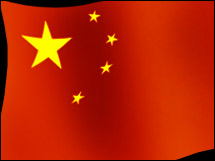
Data provider Private Equity Intelligence forecasts $450 to 500 billion will be raised this year. China's agency, expected to be functioning by the end of the year, could increase that amount 60 percent. "That amount represents the single-largest pool of cash that any government has thrown at anything, ever," according to Stratfor, a geopolitical intelligence service. "Adjusted for inflation, the United States' largest effort, the Marshall Plan, comes in at just over $100 billion." Since the Chinese government made the announcement in early March, it's offered scant details on the venture - in part because it's still being put together. Zhou Xiaochuan, China's central bank governor, has said the practices of state-owned investment entities in Singapore, Korea, Kuwait, Norway and Saudi Arabia could serve as models. CNNMoney.com contacted the Chinese consulate for details on the investment fund but received no reply. Response to the news has been mixed. Observers laud the possibility of a more professional, reform-minded arm of Chinese central banking, while others see risks of market disruption abroad, the creation of bubbles in commodities and property markets, as well as a political tool that can be wielded globally. The good news "Don't expect them to make big moves in a careless or risky manner," said James Barth, the Lowder Eminent Scholar in finance at Auburn University. "They're not going to try to disrupt the market. It's not going to be like going to Las Vegas." Barth sees the news as a sign of China's economic maturation and he says the investment will help diversify the country's portfolio, doing "what you'd expect" from any country with such a stockpile of foreign reserves. He sees the agency moving money across a wider, safer spectrum of investments, including securities and assets in other countries. Others see the creation of the agency as refining the role of China's central bank. The agency will separate the management of foreign exchange reserves from the regulation of banks and the formulation of monetary policy, according to RAND Corporation's Bill Overholt. "That's quite a sensible thing to do," he said. "There's nothing alarming about the agency. It's one more step in the professionalization of the Chinese management of their finances," said Overholt, who adds, "They need all the professionalization they can get." The agency could offer a promising implement for change among China's state businesses, which have been criticized for a management style that resembles a fiefdom. It would allow China to encourage Western standards in domestic banking and business. This is no small feat in an economy whose future is increasingly being fretted over by domestic policymakers and foreign economists alike. According to Stratfor, the investment agency could allow Beijing to reward the efficient, more transparent companies while attacking "the corruption issue directly at its source in a very real way." But what about overseas? The agency's investing strategy that raises the greatest concern from private equity watchers, however, is what kind of international investment targets will China seek? Emerging markets - energy, resources and other properties crucial to the country's national interest - are expected, as well as portfolio investments in international equity and bonds for long-term returns. Grace Ng of JPMorgan Chase Bank sees the investment fund going for both. The investment agency "with its higher risk appetite is expected to focus on strategic investments," such as energy and resources and portfolio investments "tilted towards emerging market assets," Ng wrote in a paper. For an energy-hungry nation like China, that would mean investment in oil- producing firms, regions and properties. The nation's thwarted attempt to buy Unocal (now owned by Chevron (Charts)) in 2005 is an example of the resistance China has encountered in seeking obvious strategic assets in the West. That resistance has helped keep China's investment focus on places like sub-Saharan Africa and Latin-America, where it has already inked deals for oil. In some cases, China's investment could match its foreign policy and strategic goals. In others cases, a strategic or geopolitical reward may outweigh the investment's loss, Stratfor said. China could also purchase friends with the fund. Stratfor notes, "China often offers cash with minimal strings attached, as values such as transparency and anti-corruption do not rank high within the country, much less in its foreign economic relations." Not everyone is hearing alarm bells, however. Barth calls such investments in emerging markets "a double edged sword" because the same countries that might welcome Chinese investment may be "wary of too much Chinese influence...They don't want to give up lots of control." The agency's size itself could present a problem for China, too. Almost any investment could get bid up at the mention of economic giant's interest. Finally, in as much as the investment fund draws on foreign exchange reserves - the money kept in a central bank to assure a smooth economy at home - the Chinese may be forced to seek investment where there is enough liquidity to allow them to withdraw it quickly. "If your country has a trillion dollars of reserves and you've got to move tens of billions in a crunch, big Asian countries have no choice but to put [that money] into dollars," Rand's Overholt said. Securities like Fannie Mae and Freddie Mac would be examples of possible investments for the fund, he said. "Places you can do big trades without moving the market." In any case, no matter where China invests, the country's economic power will no longer be constrained to its domestic manufacturing might and export prowess. Even as China struggles with economic reforms to put it on a track for sustained growth, or at least a smoother downturn, the advent of China's investment agency will undoubtedly make its economic might more far-reaching. ------------------------------------------------------------------- China's build-up of U.S. debt okay - Fed chief |
Sponsors
|


