NEW YORK (CNNMoney.com) -- Famed bond fund manager Bill Gross said the White House should bail out the millions of American homeowners who face the dreaded prospect of foreclosure this year.
"If we can bail out Chrysler, why can't we support the American homeowner?" Gross wrote in his monthly investment outlook on PIMCO's Web site.
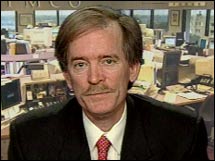 |
| PIMCO fund manager Bill Gross |
With nearly 2 million homeowners at risk of losing their homes this year and with housing prices rapidly receding, Gross said President Bush, not the Federal Reserve, is the best hope for "almost homeless homeowners."
"This rescue, which admittedly might bail out speculators who deserve much worse, would support millions of hard-working Americans whose recent hours have become ones of frantic desperation," said Gross, a founder of the fixed-income investment firm PIMCO and a columnist for Fortune.
"Write some checks, bail 'em out, prevent a destructive housing deflation that (Fed Chairman) Ben Bernanke is unable to do. After all 'W', you're 'the Decider,' aren't you?" Gross wrote.
Many have called on the Federal Reserve for help with the worsening state of the housing market, including cutting short-term interest rates. While the central bank has been reluctant to do so, Gross warned that such a move would not necessarily guarantee that adjustable-rate mortgages would not keep climbing or that mortgage lenders would relax their lending standards.
More and more troubling news has emerged from the already battered housing market recently as foreclosures nearly doubled during the month of July from last year, RealtyTrac reported earlier this week.
Home prices have also been hard hit recently, falling 1.5 percent during the second quarter, according to the National Association of Realtors. While falling home prices "might be healthy," the decline could represent an asset depreciation not seen since the Great Depression, warned Gross.
The bond manager noted a homeowner bailout wouldn't be the first time the U.S. government has come to the rescue when the economy has faced a crisis.
In the 1990s, the government rescued the savings and loan industry by absorbing its bad debt and late in that decade the Federal Reserve stepped in to restore calm after the collapse of a hedge fund, Long Term Capital Management.
Gross made a handful of policy recommendations for the White House, including creating an agency to coordinate bailouts or aid for homeowners and making adjustments in the government's Federal Housing Authority program.
He argued that action by the White House would not only help homeowners who might lose their home. Wall Street, which created, marketed and invested in complex securities backed by subprime mortgages over the years, could benefit as well.
"Your stocks and risk-oriented levered investments will spring to life like the wild flowers in Death Valley after a flash flood," Gross wrote.
In a later televised interview, Gross warned that the commercial paper market may never recover from the recent credit crisis.
"Certain portions of the commercial paper market will probably never come back," Gross told CNBC, adding that his firm has no exposure whatsoever to the high-risk mortgage loans that have sparked the crisis.
The latest data from the Federal Reserve showed total commercial paper outstanding shrinking more than $90 billion for a second week running - effectively wiping out 8.2 percent of the more than $2 trillion market.
--from staff and wire reports 


