
| Commentary | |
In defense of oil companies
It's fashionable to characterize Big Oil as greedy gougers that should have their profits taxed more heavily. Here's why that's foolish thinking.






 |
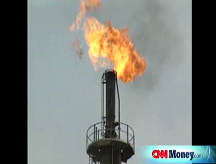
| Yeah, oil prices have surged. But savvy investors have profited from that. Schlumberger, Apache and Transocean are just a few of many energy stocks that have soared. |
NEW YORK (CNNMoney.com) -- Oil producer BP (BP) reported a 63% increase in profits Tuesday to a whopping $7.6 billion. Royal Dutch Shell's (RDS.B) first-quarter earnings increased 25% to a record $9.1 billion.
Chevron (CVX, Fortune 500) and Apache (APA, Fortune 500) are both expected to post huge increases in profits later this week.
And when Exxon Mobil (XOM, Fortune 500) reports its first-quarter results Thursday, if it doesn't report a record profit, it will come awfully close. Analysts are projecting net income of $11.4 billion.
With all this in mind, it wouldn't surprise me to see more politicians and even average Americans call for oil companies to have their so-called windfall profits taxed more heavily.
Just check out the reader reaction to the recently released Fortune 500 list, which has plenty of energy companies on it, and you'll get a taste for how much rancor people have towards oil companies.
But I think a windfall tax is a bad idea. Sure, there are plenty of reasons to complain about oil companies. Several energy CEOs are obscenely compensated. The industry could be doing a better job of finding new sources of energy to lessen the dependence on oil. And don't get me started on their environmental track records.
Here's a look at why I'm defending oil companies (and preparing for the flood of reader hate mail.)
There is a lot of concern right now about job losses and rising unemployment. Companies that are facing tough times (paging Citigroup) have been forced to layoff thousands of workers. But the energy sector has been largely immune to the problems in other industries.
I looked at the annual reports for the largest 25 energy companies in the S&P 500 and found that 20 of these firms had more employees at the end of last year than they did at the end of 2006. So the oil boom is creating jobs.
According to the most recent figures from the Bureau of Labor Statistics, average weekly wages for nonsupervisory workers in the natural resources and mining industry (which includes oil and gas extraction workers) were nearly 70% higher than the national average.
In addition, weekly wages rose nearly 8% from a year ago compared to a 4.6% increase overall.
Instead of bemoaning the amount of profits that oil companies make, people might have been better off investing in more energy firms.
Exxon Mobil's stock is up 15% in the past year. Shares of oil services giant Schlumberger have soared 36%. And deepwater oil driller Transocean's stock has skyrocketed nearly 80%.
The oil companies have also been rewarding shareholders with more than strong stock price gains. Of the 36 energy companies in the S&P 500, only five don't pay a dividend. And of the 31 companies that do pay dividends, only three have failed to increase their payouts in the past few years. Chevron and ConocoPhillips (COP, Fortune 500) both pay dividends that yield over 2%.
Could these companies afford to pay higher dividends? Probably. But the oil companies also do need to make sure they don't dedicate too much cash to give back to shareholders...which brings me to my next point.
I sometimes get the impression that people think oil executives hold clandestine meetings where they unilaterally decide to set the price of oil and gas in order to maximize their profits. After maniacally laughing about how they are gouging the American public, they then go swimming in pools of gold ala Scrooge McDuck.
But there's a problem with that theory. Even though many oil companies are reporting record profits, many people forget just how expensive it is for energy companies to engage in the oil business.
The average net profit margin for the S&P Energy sector, according to figures from Thomson Baseline, is 9.7%. The average for the S&P 500 is 8.5%. So yes, energy companies are more profitable than many others...but not by an inordinate amount.
Google, for example, reported a net profit margin of 25% in its most recent quarter. Should we have an online advertising windfall profit tax?
At the end of the day, we shouldn't emulate Venezuela of all places and slap higher taxes on oil companies just because crude is around $120 a barrel. In free markets, there are times when many companies do well and others will not.
And just as I firmly believe that the Federal Reserve may have set a dangerous precedent in "rescuing" Bear Stearns from bankruptcy, I also think the government shouldn't step in and punish energy companies when they are doing well.
Hopefully, the Fed will take a tougher stance on inflation in the next few months in order to strengthen the dollar and remove much of the speculative froth that has pumped up oil prices. That, more than increased taxation on energy companies, is what will get the economy out of the oil slick it's now in.
Issue #1 - America's Money: All this week at noon ET, CNN explains how the weakening economy affects you. Full coverage.
Under the government's economic stimulus plan, 130 million people will receive tax rebate checks for $300 and up, starting April 28. What do you plan to do with your check? How do you think the stimulus plan will affect the economy? Send us your photos and videos, or email us and tell us what you think. 



