
Shooting the moon on renewables
While McCain wants to drill more oil to fight $4 gas, Obama calls for an 'Apollo project' aimed at alternative energy. Should the government get involved?



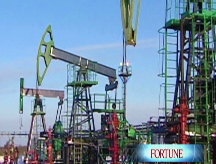

NEW YORK (CNNMoney.com) -- This week's push for increased U.S. oil drilling - both offshore and in Alaska - is part of a longer-standing debate about the best way to solve the energy crisis: tap domestic reserves or put more emphasis on developing alternatives?
Presumed Republican presidential candidate John McCain called Tuesday for opening more fields off the East and West coasts to drilling. On Wednesday, President Bush reiterated that call and urged development of fields in protected land in Alaska, something McCain still opposes.
But experts say additional drilling would only boost production by about 2 million barrels a day. That's about 20% of domestic oil production, but only about 2% of total worldwide demand, so its impact on prices would likely be marginal. In short, it's not a long-term solution to the nation's energy challenge.
Some say a real solution lies in the government embarking on a massive effort to fund renewable energy - something akin to the Apollo program that put a man on the moon in the 1960s.
Supporters are calling for the government to boost funding from about $4 billion a year now to $30 billion a year - every year for the next few decades.
"That's less than a third of what we're spending in Iraq," said Keith Schneider, a spokesman for the Apollo Alliance, a coalition of politicians, environmentalists, labor groups and businesses pushing the idea. "It's not a big number."
Barack Obama is halfway there. The presumed Democratic nominee wants to fund renewable energy to the tune of $15 billion a year for 10 years, paid for by auctioning off permits to companies that emit greenhouse gases.
McCain also wants to issue permits to pollute in an effort to gradually reduce greenhouse gasses - a plan known as "cap-and-trade" - but he doesn't want to charge companies for them, at least at first.
He also does not support a big government effort to fund renewables, instead relying on the greenhouse gas restrictions and lower corporate taxes to spur private sector investment. It's perhaps the biggest difference between the two candidates' energy policies.
Debating government's role
Plenty of people agree with McCain and say the government has no business in the renewable energy business.
The government already is spending billions on renewable energy, and the private sector even more, said David Kreutzer, an energy economist at the Heritage Foundation, a conservative think tank. More money will likely mean more pork, but not more results, he said.
"There won't be some Brave New World of energy simply because the government spends $30 billion a year," he said "This is just another version of we're going to spend our way to the Jetsons' lifestyle," referring to the animated futuristic family.
And every $30 billion the government takes out in taxes is $30 billion the private sector can't invest on its own, he said.
The Apollo Alliance's Schneider counters that the government has had a long history of being the prime backer, at least at first, of big projects that serve a greater public good. They include land grant colleges, the railroads, the Interstate System of highways and the Internet, he said.
"The government, working with the private sector, has produced tremendous gains in a way that's much more fair than the free market would," he said. "The free market might achieve a cleaner environment, but not at the pace we need to move."
He also said the nation is hardly operating in a free market when it comes to energy, noting the massive government support for the highways that led to urban sprawl and defense expenditures related to protecting oil supplies.
While most people think wind and solar when they hear renewables, Schneider says the project centers around several key points that include typical renewables, but also call for a state-of-the-art high-speed rail system in major urban corridors and improved public transit within cities.
It also calls for better community design that is more pedestrian- and bike-friendly and less reliant on the automobile, a point Obama makes in some detail on his Web site.
Assessing the possible payoff
So what will the nation get for all this money and effort? After all, the U.S. government says that, under current policies, oil, natural gas and coal will still provide the overwhelming majority of the nation's energy two decades from now.
And those in the oil and utility industry often point to the huge amount of power the world consumes and are skeptical renewables could provide even a significant fraction of that anytime soon.
For starters, Schneider said the project would create 3 million domestic jobs.
On the energy front, backers of renewable energy say it could power half the nation by 2030, given enough funding. Clearly, those are forecasts made on not much more than an educated guess.
Voters will decide if $15 billion a year is too big a wager. 



