

Why we need to cut seniors' benefits
Economist Isabel Sawhill says America's elderly are getting too big a slice of the taxpayers' money.



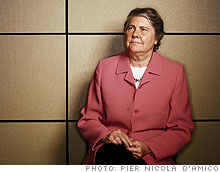 |
| "I don't think that the working-age population should continue to fund benefits for seniors who are so well off." - Isabel Sawhill |


(Money Magazine) -- Whether or not Congress or the Federal Reserve manages to solve the financial crisis, there will be an equally scary situation that has not yet made newspaper headlines.
The big three of entitlement programs - Medicare, Social Security and Medicaid - will wreak havoc on the country's finances (and yours) unless we scale them back, says Isabel Sawhill, an economist at the Brookings Institution and member of a bipartisan think tank trying to sound the alarm.
Question: You talk about fixing the unwritten agreement between younger and older generations - the "intergenerational contract." What's broken?
Answer: The existing contract assumes that the working-age population is going to be able to support the older population - the retired population - out into the future and should do so. And that's not a sustainable assumption.
Q. Why not?
A. Forty-two percent of federal spending now goes to three programs, with the major share to the elderly.
Two or three decades from now, those three programs will be as large as the federal government is today.
Let's say someone is now paying 25% of their income in taxes. To maintain the commitments we've made to the elderly, they would have to pay 50%.
Q. What's the solution?
A. We need those who can afford it to contribute more to their own retirement costs.
Take Social Security: Right now the benefit formula provides a pretty good retirement income to those who make more than $100,000 a year.
I don't think that the working-age population should continue to fund benefits for seniors who are so well off.
Q. And you want to spend this money instead on the younger generation?
A. Yes. We would reap enormous economic benefits from spending more on early childhood education. It's like any investment that has a rate of return.
If you do it when people are young, it's going to help make them more productive and enable them to earn a reasonable living.
Q. Wouldn't the AARP crowd scream bloody murder about benefit reductions?
A. I don't think all older Americans are opposed to investing in their children and grandchildren.
Q. So how do you sell this idea of spending less on the elderly and more on the young?
A. We have to change the debate, which has been focused on the idea that there's going to be generational warfare.
I'm trying to get away from that concept by talking about the fact that every individual, every generation, should expect more from their government when they're young and less from their government when they're old.
That's not generational warfare. That's common sense.
You can read Sawhill's paper on the the subject here.
How does your religion affect your finances? Money Magazine is seeking families willing to discuss the dollars-and-cents expenses involved in practicing their faith - the cost of everything from religious schools and dietary restrictions to tithing and faith-based investment limitations. If interested, please email your name, contact information and family photo, along with a brief summary of your salary, savings and religion-related expenses, to gmannes@moneymail.com. 



