
Bill embraces FDIC loan modification plan
Controversial foreclosure prevention floated on Capitol Hill, but action is unlikely until next year.



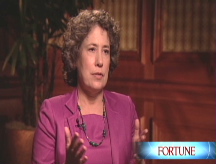

NEW YORK (CNNMoney.com) -- With the Bush administration refusing to enact FDIC Chairwoman Sheila Bair's controversial loan modification plan, lawmakers are taking matters into their own hands.
On Wednesday, Rep. Maxine Waters, D-Calif., is introducing the first legislation incorporating Bair's proposal to systematically modify loans and provide a government guarantee against default. The measure is estimated to ultimately save 1.5 million homeowners from foreclosure and would cost $24.4 billion, which Waters would take from the $700 billion financial industry bailout bill.
"The current foreclosure crisis continues to spiral out of control and our current programs for dealing with this crisis are simply not getting the job done," Waters said.
Waters' action is one more sign that Democratic lawmakers want more to be done to help the exploding ranks of delinquent homeowners. Rep. Barney Frank, D-Mass., head of the powerful House Financial Services Committee, said Monday that any new proposals involving the bailout funds must include foreclosure prevention programs.
Waters' bill, however, will likely have to be reintroduced when the new Congress takes office next year unless similar measures are worked into any new bailout proposals. Several banks, and mortgage finance companies Fannie Mae (FNM, Fortune 500) and Freddie Mac (FRE, Fortune 500), have recently put their own loan modification plans into place. And as part of its federal bailout, Citigroup (C, Fortune 500) must start modifying loans in accordance with Bair's guidelines.
Meanwhile, the number of homes falling into foreclosure is rising daily. A record 1.35 million homes are in foreclosure and a historic high 6.99% of borrowers are behind on their payments, the Mortgage Bankers Association reported last week.
Bair has long been a proponent of systematic loan modifications, and has put her plan into action at IndyMac, which the FDIC took over in July. Officials had modified 5,000 loans as of mid-November.
With Treasury Secretary Henry Paulson giving little more than lip service to Bair's plan, the chairman unveiled its details last month.
First, housing payments for delinquent borrowers two months or more late would be reduced to 31% of gross monthly income. To get there, mortgage rates could be set as low as 3% for five years, before increasing at an annual rate of 1 percentage point until they hit the prevailing market rate. Loan terms could be extended to as long as 40 years.
Each loan will be tested to see whether it is more beneficial to modify or to foreclose.
Second, to encourage servicers and investors to participate, the government would share up to 50% of the losses if a borrower who had been helped ended up in default anyway. The risk of re-default had been one obstacle to getting lenders on board with systematic modification plans. This guarantee takes the program a step further than what's currently being done.
In addition, the FDIC would pay servicers who process mortgages $1,000 for each re-worked loan.
At a national housing forum this week, Bair reiterated how important it is to step up the pace of loan modifications. There are likely to be 2.25 million foreclosures by year's end, Bair said, citing statistics from Federal Reserve Chairman Ben Bernanke. Usually, there are only 800,000 to one million.
"We are falling behind the curve," Bair said. "We are way above where we need to be. There are a lot of unnecessary foreclosures going on that can be prevented through more aggressive loan modifications." 



