
Can Windows 7 save PCs?
Microsoft's new operating system is coming this fall, but experts say a PC rebound is a ways away -- and will happen in spite of the new software.



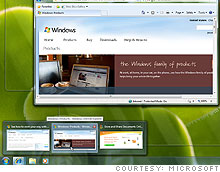 |
| Windows 7 is set to debut on Oct. 22. |
NEW YORK (CNNMoney.com) -- Windows 7 is coming soon. But having a PC sales rebound come with it seems unlikely.
Computer sales are mired in an awful slump, as businesses and consumers have reined in spending during the recession. Year-over-year global PC shipments fell 7% in the first quarter, the largest drop in that measure since the third quarter of 2001 amid the dot.com bust, according to tech analysis firm IDC.
But Microsoft's new operating system is set to debut on Oct. 22, and experts for the most part like what they have seen. That's a dramatic shift from the largely negative reviews -- and disappointing sales -- of its current Windows version, Vista.
"Microsoft learned a lot from its mistakes with Vista," said Richard Shim, analyst at IDC. "They fixed some very important features and made an impressive operating system."
Despite the positive reviews, most analysts say Windows 7 alone is not enough to jumpstart lackluster PC sales. They cite customer animosity toward Microsoft (MSFT, Fortune 500), a change in consumer trends and the typically slow pace of businesses' OS integration as reasons.
Microsoft's problem: Windows is by far the most-used PC operating system. Last year, 83% of new PCs sold had Windows built in.
Windows 7 may be a shiny and new version of the world's No. 1 OS, but analysts wonder if customers are willing to give Microsoft a second chance after Vista. Users complain that Vista is sluggish, has too many versions and is susceptible to bugs.
According to a survey of more than 1,000 IT professionals nationwide conducted in March by Dimension Research, 50% said they were considering leaving Windows altogether rather than switch to Windows 7. Apple's (AAPL, Fortune 500) Mac OS X was the system they are most likely to switch to.
"Microsoft tried to stuff too many features into the Vista bag, and the bag burst," said Zeus Kerravala, analyst with Yankee Group. "There was a big loss of goodwill towards Microsoft [over Vista.]"
Happy with my clunker: Disenchantment with Windows may not help a PC sales rebound, but PCs may have been doomed anyway.
As more and more applications become available on the Internet, consumers have begun to rely less on computer processing speeds and operating systems' bells and whistles. Online programs such as Google Docs, Yahoo Mail and Wikipedia, for the average consumer's purposes, can stand in for Microsoft Word, Outlook and Encarta.
It's called "cloud computing" (the software is "in the clouds"), and analysts say it will likely continue to damage PC sales growth.
"The most important part of valuating a PC five years ago was its OS, but with more applications moving to cloud, the browser is quickly becoming the most important feature," said Kerravala.
With Internet browsing becoming faster on non-computer devices such as mobile phones and video game systems, analysts say customers are delaying the purchase of new computers from the typical three-year refresh to as much as five years.
Slow to catch on: One set of customers that still rely heavily on PCs are businesses. But companies' integration of operating systems is typically slow.
According to the Dimension Research survey, 84% of IT professionals who are planning on switching to Windows 7 said they are going to wait at least a year to upgrade.
Gartner analysts John Enck and Mike Silver said a six to 12-month period of compatibility testing is typical before businesses begin to adopt a new OS, as IT departments work in companies' customized features and applications.
On a conference call in May, Dell (DELL, Fortune 500) Founder and Chief Executive Michael Dell agreed that a technology refresh cycle is about "nine months to a year out."
Consumers are slow to catch on too. According to IDC, a release of an OS has not led to an immediate boost in shipments since Windows 95 was launched in 1995. Sales have picked up in successive years, though. For instance, Windows XP, which was launched in 2001, had a record sales year in 2007.
Rebound still coming: Though Windows 7 may not be the catalyst needed to spark a rebound in PC sales, most experts say a natural PC sales boost is due by late next year anyway.
A stunning 83% of IT professionals in the Dimension Research survey skipped a Vista upgrade and continue to use the eight-year old Windows XP -- which is ancient, by computer standards. Analysts say businesses will often upgrade their hardware with a new operating system, and the lack of a Vista upgrade means many companies are using older computers that are two or more years past their typical decommissioning period.
"A natural PC sales refresh is coming up from the commercial side, as big companies pushed off a refresh a couple of times during the downturn and kept their old systems," said Shim.
Still, the rebound won't happen anytime soon. Enck said the PC market slump could last until at least the third quarter of 2010. And according to a recent Gartner forecast, U.S. PC sales won't rebound past 2008 levels until 2011. 



