|
Preparing the NYSE for Its Public Moment
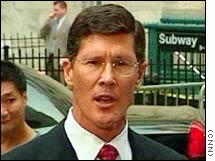
 (FORTUNE Magazine) - The tired line about a chief executive is that so-and-so "is presiding over this institution during a period of unprecedented change." But in the case of John Thain, CEO of the New York Stock Exchange, it rings true. The latest momentous moment for the 50-year-old former Goldman Sachs COO is his move to take the NYSE public by merging with Archipelago in March. It's been a wild ride for Thain, who was tapped two years ago, after Dick Grasso left the exchange during an ugly compensation flap. FORTUNE's Andy Serwer recently caught up with Thain. Why go public?
We will run more efficiently. We also need to do this to compete with the other exchanges in the world, which for the most part are public. There is going to be consolidation in this business, and we need the currency, whether it's to make deals or to invest in new technology. This will be a huge positive for investors in listed companies, because at the end of the day we will have better pricing and better liquidity. After going public, what are your goals? We plan to have a secondary offering in the future. We will look to growing revenues and managing ... with an eye to reducing expenses. We also want to get our hybrid system--which is where the customer can trade stocks traditionally or electronically--running well. We've got 140 stocks up and running; once we get SEC approval this year, we'll put all of our stocks up. And we want to be a leader in the consolidation of exchanges here and in Europe. Why pursue deals with other exchanges? There are hundreds of exchanges in the world. Vietnam now has two competing exchanges. There are various exchanges here and in Europe that we would be interested in partnering with. Global competition for trading and listings, especially in Europe, is increasing. We need to be in that game. Floor brokers are worried that they're a dying breed. True? No, that's not true. Is there going to be more technology? Yes. But don't forget, we aren't going to stand still. [We're] going to grow and grow. We've auctioned off licenses for leases to trade on the NYSE, which sort of effectively replace seats, and demand exceeded the number of seats that were currently being used. Is there a need for specialists anymore?
Yes, especially in unusual situations. Take the day Merck (Research) pulled Vioxx. At the open there were five million orders to sell MRK and few buyers. A computer would have a tough time with that; the specialist had to figure out how to satisfy the imbalance. He opened the stock at $33. He had five million shares to sell and 4.5 million to buy. He filled in for the 500,000 shares. At [day's end], 100 million shares of MRK were traded, and the stock closed at $33. The specialist did a hell of a job. |
|