|
3 big companies where women rule How three macho companies spotted - and promoted - a critical mass of female talent.  (Fortune Magazine) -- Given the recent influx of new female CEOs, will 2006 be seen as the year when women definitively crashed the boys' club in the C-suite? Probably not. When it comes to business, women are still very much a minority. They make up 35% of MBA recipients, and the numbers dwindle from there, down to about 2% of Fortune 500 CEOs. "What we've found," says Ilene Lang, president of Catalyst, a research group that takes an annual census of women in the Fortune 500, is that "women rise to the middle, but they don't easily get to the top." That got us thinking: If women tend to get stuck in the middle, maybe something could be learned from companies whose top level includes a high concentration of female talent. And yes, they do exist. We took a look at three big companies, in macho industries, that defy the statistical norm.
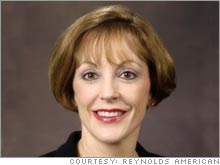
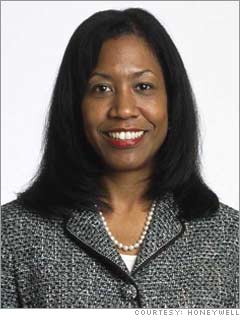
First up is Reynolds American (Charts). The tobacco giant is the only Fortune 500 company to have women in the CEO and CFO positions, as well as a female COO running its largest subsidiary. Then there's DuPont (Charts), where two women run three of the company's five business segments, bringing in $18 billion of DuPont's $27 billion in annual revenues. And Honeywell (Charts) is unlike any of its competitors in having an equal number of men and women - two apiece - as divisional chief executive officers. What's going on here? For a start, all three companies are fanatical about measurable results. "We're a performance culture," says Nance Dicciani, president and CEO of Specialty Materials at Honeywell. "The results and how you get them are judged and rewarded accordingly." All companies say they value performance, but Reynolds, DuPont and Honeywell go further, creating the conditions - empirical standards, clear goals, frequent reviews - that enable them to identify and reward high performers, regardless of sex. "We're a science company," says Diane Gulyas, who heads the $6.8 billion Performance Materials division. "Innovation is our lifeblood and that spirit of creativity comes from diversity." Highfliers are not just recognized. They're asked to take the kinds of tough assignments that give them the chance to leap beyond middle management. Reynolds CEO Susan Ivey says her big break came in 1990, when she was asked to take an overseas assignment and given 48 hours to decide. She went for it. The experience, Ivey says, was "broadening in every way." After 19 years of working on car-related materials at Corning (Charts), Adriane Brown made a daunting industry switch to aerospace at Honeywell. Now she is back to cars, running Honeywell's $4.5 billion Transportation Systems division. Ellen Kullman, DuPont's top-ranked woman, was leading a successful $2 billion unit (White Pigment and Mineral Products) when, in 1998, CEO Chad Holliday asked her to create a division out of DuPont's scattered safety businesses. "My peers here were wondering why in the world I would do such a thing," she says, "but it was a defining moment to build something in this company." The resulting $5.2 billion Safety and Protection division is now one of two business segments Kullman oversees. Gulyas didn't wait to be asked: She volunteered for an operating job when she had only sales and marketing experience. "There's a willingness here to put you in high-risk, high-reward situations," she says. She learned along the way and caught management's attention. Then there's the chain-reaction effect. High-level female executives can inspire women throughout the organization and draw new talent. Ivey says Reynolds's new general counsel, E. Julia "Judy" Lambeth, was attracted to the job in part because there were so many women at the top. "It's easy for companies to say they don't have a glass ceiling," says Ivey, "but when you walk in the door here, it's eminently clear that we don't." Next: 50 Most Powerful Women |
|