

CNNMoney.com
Companies Economy International Corrections Pre-market Trading After-hours Trading Winners/Losers/Actives Bonds Currencies Commodities World Markets Money Magazine Real Estate Taxes Jobs Ask the Expert Money 101 Autos Mutual Funds The Help Desk Loan Center Best Places to Live Ask the Expert Ultimate Guide to Retirement Retirement Calculators Best Funds Best Places to Retire Fortune Brainstorm Tech Apple 2.0 Blog Big Tech Blog Sectors and Stocks Tech Talk Resource Guide Small Business Makeovers Questions & Answers Small Business Video 100 Best Places to Launch FSB 100 Fortune Small Business Fortune 500 Brainstorm Tech Investing Management C-Suite Rankings Main Create Portfolio Edit Portfolio Create Alerts Edit Alerts
How to Succeed in 2007
We asked 50 of the brightest minds in business how they do what they do - and how you can cash in on their advice in the year ahead.
Back to feature
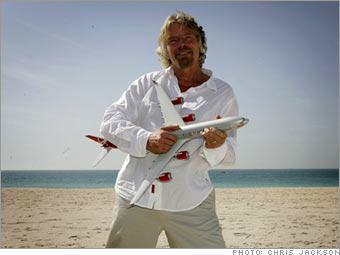
Richard Branson
Richard Branson
Founder and Chairman, Virgin Group
Learn How to Say No (Even if You're Known as "Dr. Yes")
I turn people down with extreme difficulty sometimes, because the people I'm saying no to are people I don't want to discourage. And it should be difficult. Saying no shouldn't be an easy thing to do, and you have to be good at it. I often used to dodge doing it myself, and hide behind other people and delegate it, but if you're the boss, that isn't the right thing to do.

I remember when I was a 15-year-old asking Vanessa Redgrave or James Baldwin for an interview, and the fact that they took the time to respond meant an enormous amount to me. It inspired me. So it's extremely important to respond to people, and to give them encouragement if you're a leader. And if you're actually turning people down, if you must say no, whether it's for a job or a promotion or an idea they're proposing to you, take the time to do it yourself.

I met two big San Francisco entrepreneurs recently, and they said they get e-mail like this too, but they just dump it all in the dustbin. They don't try to answer at all. I asked them why, and they said, "The time we spend responding could be used to create something of value for our business." That may well be pragmatically right, but I still think it's morally wrong, and I suspect that anything that is morally wrong is ultimately bad for business.
 What do you think it will take in 2007 to succeed in business? E-mail the editors here.
The 50 People Who Matter Now A Business 2.0 exclusive list: Meet the executive, entrepreneurs, and cutting-edge innovators who are setting today's business agenda. (more)
Best-Kept Secrets of the World's Best Companies Here are 25 great management practices you've probably never heard of - and might want to start implementing tomorrow. (more)
© 2009 Cable News Network. A Time Warner Company. All Rights Reserved. Terms under which this service is provided to you. Privacy Policy
Copyright © 2009 BigCharts.com Inc. All rights reserved. Please see our Terms of Use.
MarketWatch, the MarketWatch logo, and BigCharts are registered trademarks of MarketWatch, Inc.
Intraday data provided by Interactive Data Real-Time Services and subject to the Terms of Use.
Intraday data is at least 20-minutes delayed. All times are ET.
Historical, current end-of-day data, and splits data provided by Interactive Data Pricing and Reference Data.
Fundamental data provided by Morningstar, Inc..
SEC Filings data provided by Edgar Online Inc..
Earnings data provided by FactSet CallStreet, LLC.