How to get the best deal for your home Big-box stores can have lower prices; independents might be more willing to haggle. Both will make big claims about comfort and style. The verdict on bedding, couches and rugs.  NEW YORK (Money Magazine) -- Catalogues and giant anchor tenants in malls dominate the housewares industry, but while their purchasing power can mean lower prices on some items, most national retailers are locked into a rigid pricing structure, which means no haggling. For independent retailers, however, haggling is not only permitted, it's expected (figure on dropping the price by 15 percent to 20 percent).
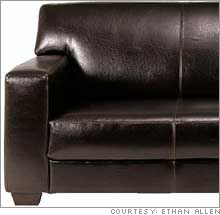
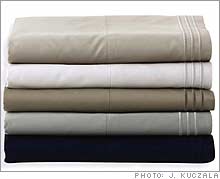
Regardless of where you shop, remember that the only true judge of quality is you. It doesn't make any difference if some salesperson regales you with tales of this cotton's provenance or that sofa's coil count - only your hand and keister can really tell. Getting the best deal on a couch The industry's pitch Designer-name couch for $699! Marked down from $1,299! All prices are final! Rebuttal Like clothing designers, furniture designers make different lines for different stores. So the couch you see at a discount store might look just like the posh store's model, but the company took construction shortcuts to keep the price down. (Think outlet vs. retail stores.) Also, about 85% of local stores will give you a discount if you ask (request 20% off), so don't be shy. And in the end, nothing is as important as how a couch feels. The Verdict Sit on the couch. For a while. If it's a sleeper, fold it out and have a lie-down. Make sure the springs are made of eight-way hand-tied coils for long-lasting support. Look for a kiln-dried hardwood frame (not steel) for durability. Less assembly is good too - the more pieces there are, the more likely it is that things will jiggle over time. A good retailer to start with? Ethan Allen, says Jennifer Litwin, author of "Best Furniture Buying Tips Ever!." "Their sales staff is great and their furniture is well-made." Getting the best deal on bedding What the industry says Thread count is king - the higher the better. The best sheets are made from Egyptian cotton. Rebuttal Single-ply sheets (sheets in which single threads are used to weave the material) top out at a thread count of about 500. Any higher and you're probably holding a double-ply or triple-ply sheet (in which two to three threads were wrapped together to make a thicker strand). This can be more durable than single-ply, but it's also heavier, which some people don't like. Egyptian cotton is special only if it's the primo extra-long staple (ELS) kind. Ordinary cotton from Egypt is no different from ordinary cotton from the U.S. The Verdict Look for single-ply sheets made of 100% pima cotton (ELS cotton from around the world) or supima cotton (ELS cotton grown in the U.S.). For extra softness, opt for 100% cotton sateen, such as what's found in Sears' Everyday Luxe collection, which costs around $100 for a queen set. No matter what you buy, know that you don't have to go much beyond a thread count of 300 to feel babied. Getting the best deal on an oriental rug Expert view from Bruce Kitney, a New York City rug store owner Knot count, or knots per square inch, is frequently talked about, because it's one of the few characteristics you can measure. But it can also be misleading. A Baluch rug with a knot count of 95 is a pretty neat example of the type. But you don't talk about a self-respecting silk rug until you're at around 500 knots. A high knot count doesn't always mean better durability either. High counts tend to go with very complicated designs; the weaver will clip the nap to make it thinner, so you can really see the work. A more loosely woven but thicker rug will last just as long. The best-quality carpet is hand-knotted - not hand-tufted or machine-woven. Hand-tufted rugs are sometimes sold as "handmade," but they're one-sided, so they're no different from carpeting. Machine-woven rugs will usually have some surging, or hemming, and the design won't be as colorful on the back of the rug. Good-value rugs are coming in from China. They use quality wool, and it's a well-made structure. A good Chinese rug is probably floral in design and 175 knots or so, and you'll probably pay $2,000 and up for a typical eight-foot-by-10-foot carpet. ______________________________________ More tips for getting the best deals: Tech: Cell phones, home video, music downloads Kitchenware: Cookware, dishwashers, knives Cars: Navigation systems, pre-owned vehicles, auto repair Apparel: Dresses, running shoes, suits Luxuries: Watches, wine, concert tickets, puppies |
| ||||||||||||||||